


25 Years of Innovation
for Happy Cells and Happy Scientists
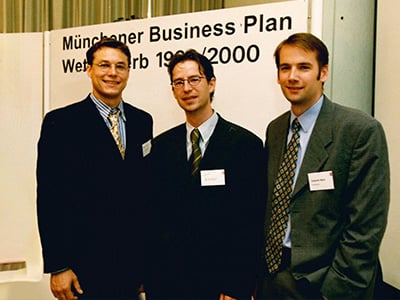
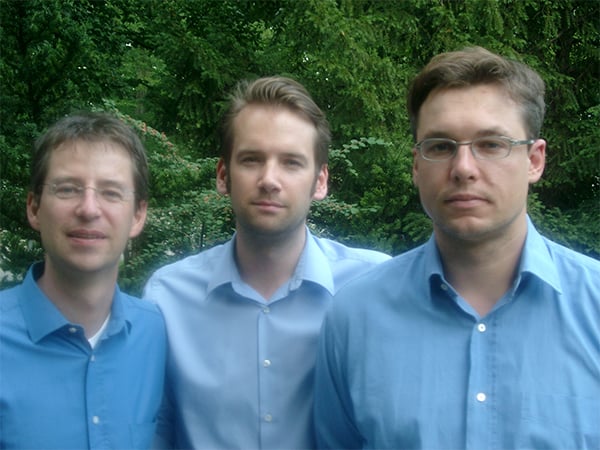
Twenty-five years ago, four scientists working in a university basement set out to redesign how cell experiments are done. Spoiler: they did. From the first µ-Slide cut by hand, to the first trade show with a tiny booth and big dreams, to today’s global presence with headquarters in Munich, Germany, and Madison, USA, every step has been shaped by people who believed in the mission long before ibidi had a logo.
Over the years, our employees, partners, and customers have turned an ambitious start-up into a trusted name in cell culture, microscopy, microfluidics, and live cell imaging. We've grown, moved buildings, expanded our portfolio, added new technologies, and welcomed thousands of scientists from around the world into the ibidi community.
And the best part? We’re still having fun. Still independent. Still listening to researchers and still convinced that good science happens when the right people, ideas, and tools come together. Twenty-five years behind us and the next ideas are already waiting on the bench.

Powered by People, Driven by Science
ibidi has never been just about products. It has always been about people. Curious scientists. Creative engineers. Problem solvers in development, production, support, and communication. Over 25 years, this shared mindset has shaped how ibidi works, grows, and turns everyday lab challenges into better tools for science.
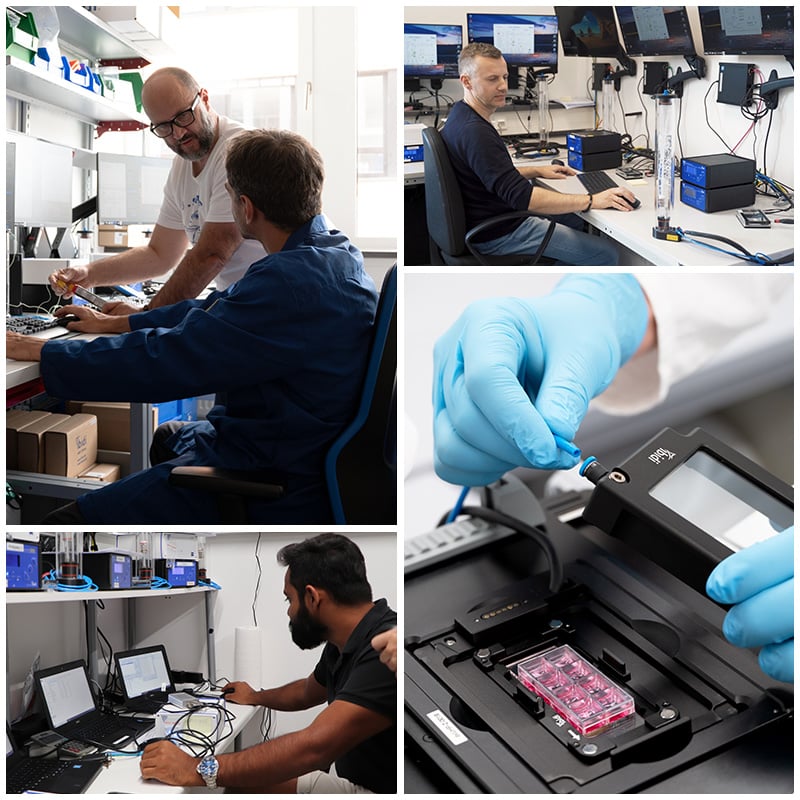
Research Department
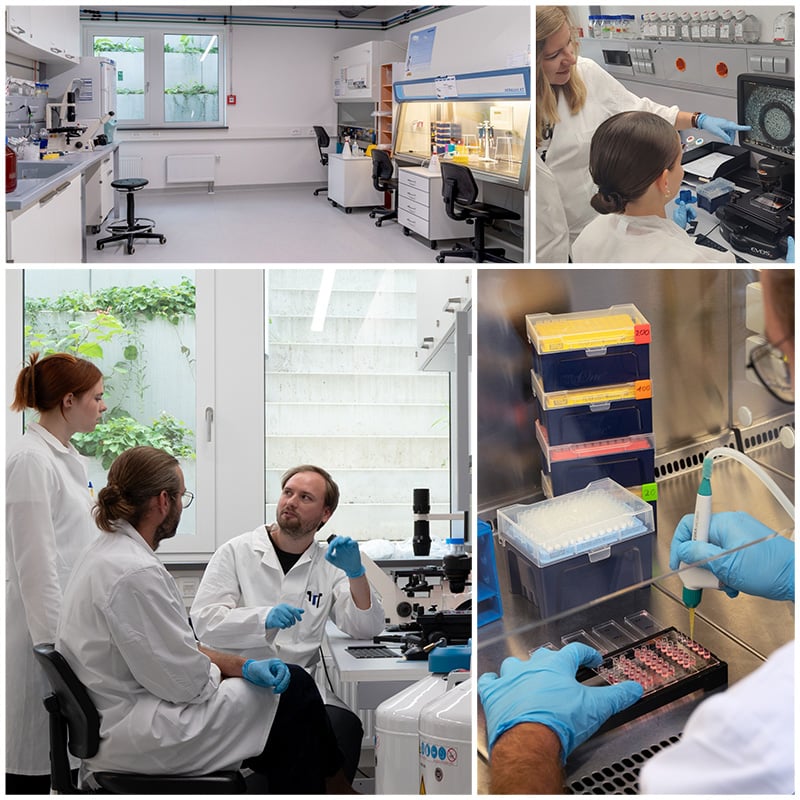
Every new idea at ibidi starts with a question. In the Research Department, scientists explore cell biology and microscopy with one eye on the literature and the other on real problems from real labs. Many ideas begin with user feedback or a casual conversation and grow into technologies that address genuine experimental needs.
Product Development
This is where sketches, prototypes, and “what if” ideas turn into real products. Biophysicists, biologists, chemists, and software developers work side by side, testing, refining, and sometimes rethinking everything. The goal is simple. Build tools that work reliably in everyday lab life, not just on paper.
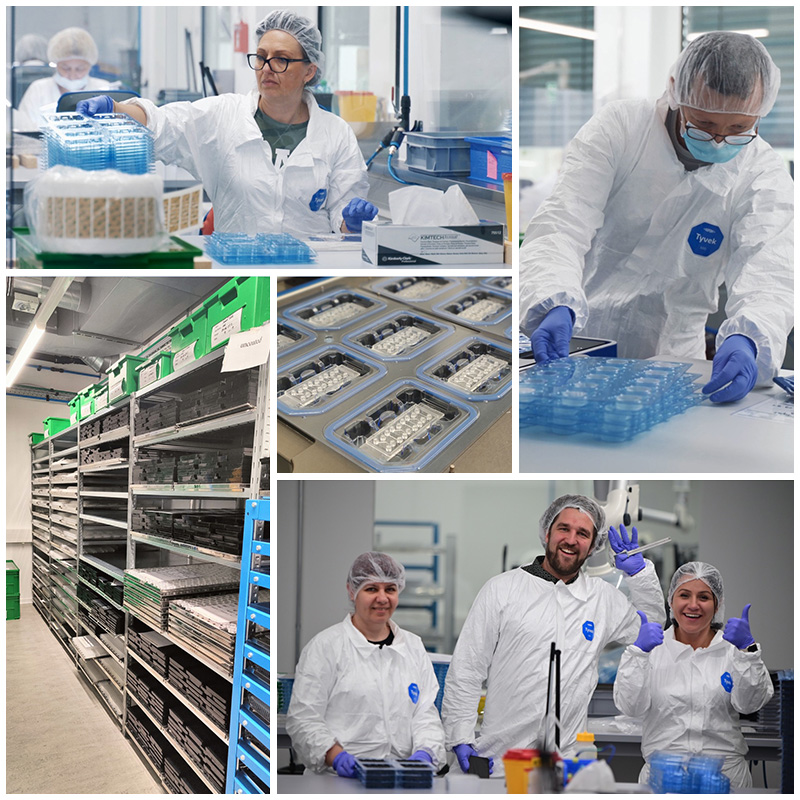
Production Department
Turning a good idea into a product that works the same way every single time takes precision and care. The Production team makes that happen. With clear processes, strict quality control, and a lot of experience, they ensure that every ibidi product meets the same standards, whether it is the first batch or the thousandth.
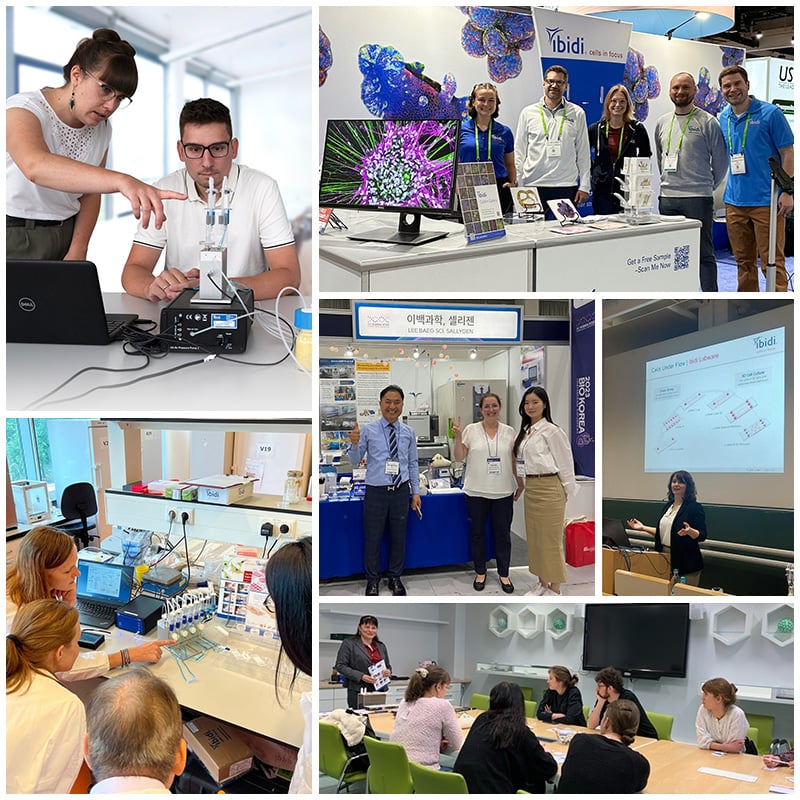
Customer Success Team
Science rarely goes exactly as planned and that is where the Customer Success team comes in. They support researchers from the first idea to the final data, helping with product selection, experimental setup, troubleshooting, and training. Their goal is to make sure scientists feel supported, not stuck.
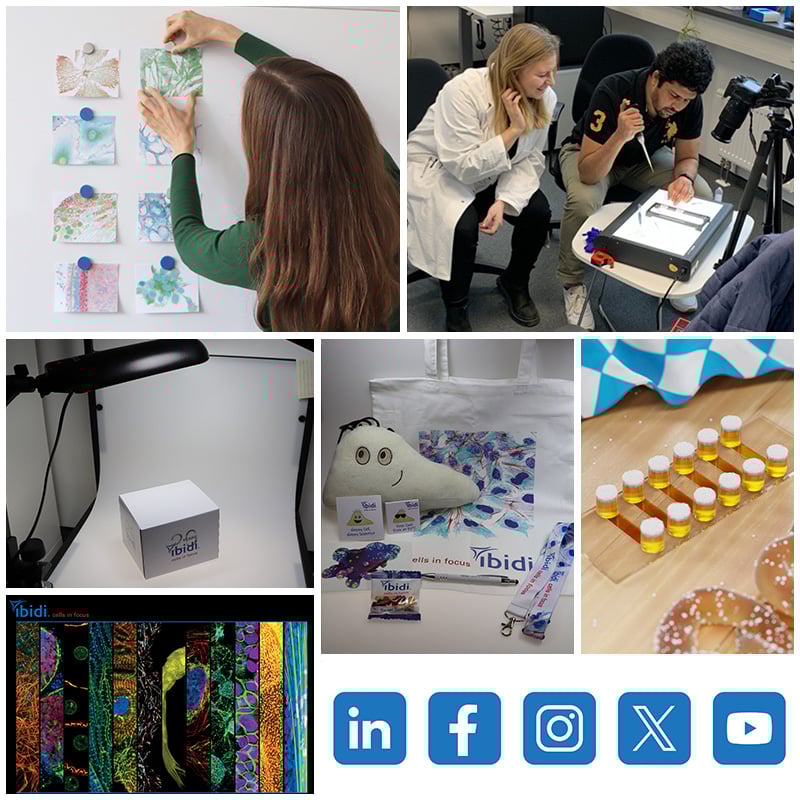
Marketing Team
Great technology only helps if people understand it. The Marketing team makes complex science clear and accessible. Through websites, videos, social media, events, and campaigns, they connect ibidi innovations with scientists around the world and help turn technical details into useful knowledge.
Shipping and Logistics Team
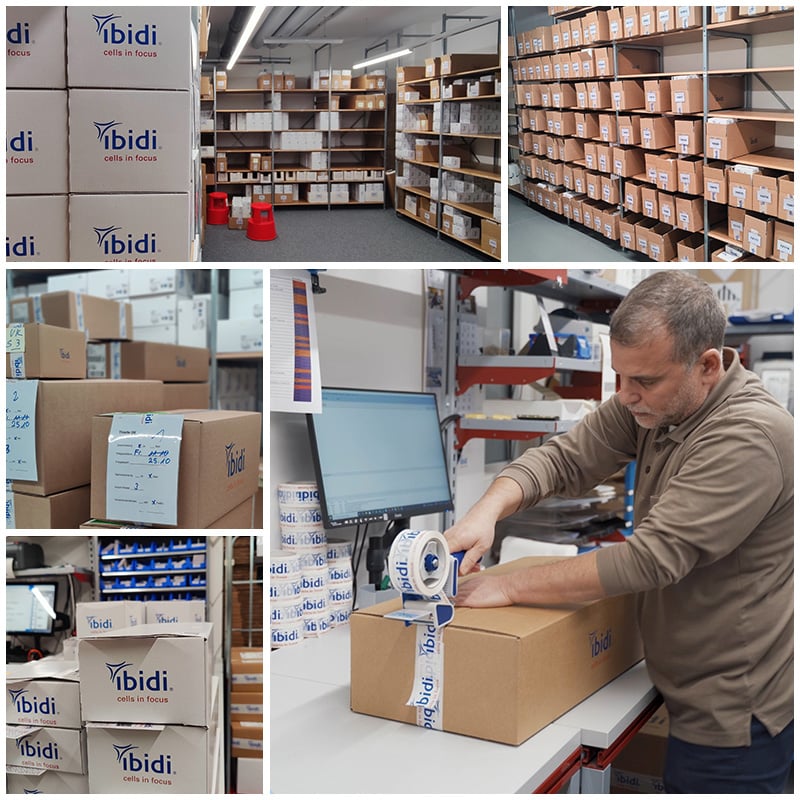
Experiments cannot wait. The Shipping and Logistics team makes sure ibidi products arrive where they are needed, when they are needed. From inventory and packaging to customs and global distribution, they work behind the scenes to keep research moving without delays.
25 Years of Innovation
Twenty-five years can feel like a lifetime or like the blink of an eye.
At ibidi, it has been both. Scroll through the years to see how global milestones and ibidi ideas quietly grew side by side.
ibidi is founded. Spin-off from TUM and LMU Munich to improve cell-based assays.
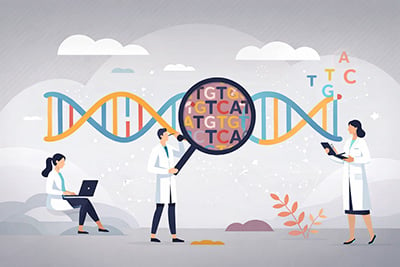
First complete human genome sequence is published. A defining moment for life science research.

"Me at the zoo” is the very first video ever uploaded to YouTube.
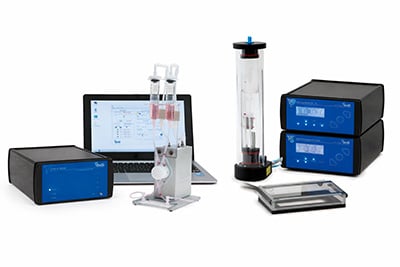
Launch of the ibidi Pump System for perfusion-based cell culture and the ibidi Stage Top Incubator for long-term live cell imaging under physiologic conditions.
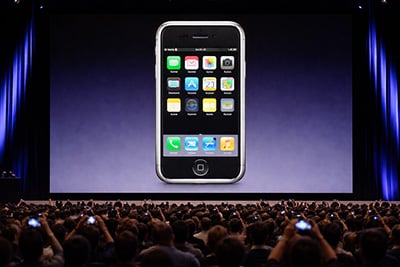
First iPhone launches. Beginning of the smartphone era.
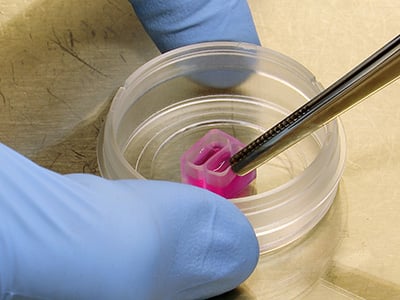
Launch of the Culture-Insert. Standardized wound healing assays.
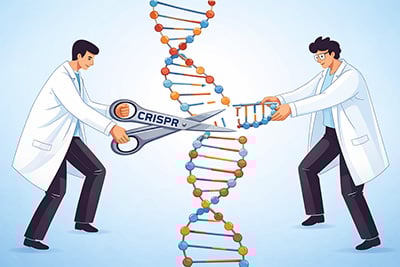
CRISPR-Cas9 enters the lab. Gene editing becomes faster, simpler, and more precise.
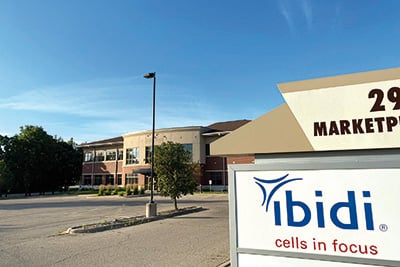
ibidi USA is founded. New headquarters in Wisconsin.
Nobel Prize honors cancer immunotherapy. A paradigm shift in oncology.
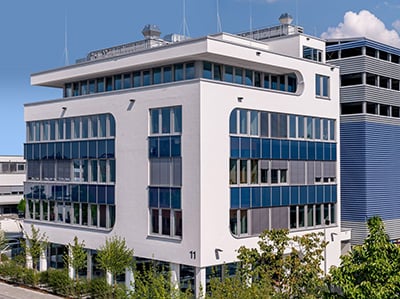
Move to ibidi building in Gräfelfing, near Munich. New offices, R&D, and production space.
COVID-19 declared a pandemic. Global disruption.
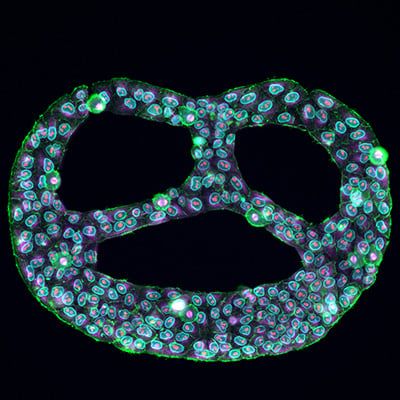
Launch of µ-Patterning technology. Spatially defined cell adhesion.

ChatGPT goes public. Suddenly, everyone is talking to AI.
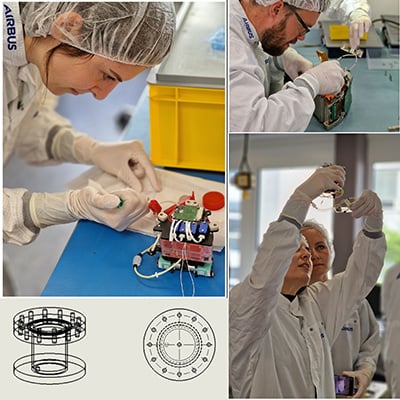
ibidi goes to space. Live cell imaging under microgravity in collaboration with DLR and Airbus.

Paris hosts the Olympic Games. One of the most watched global events of the decade.

ibidi turns 25. A milestone anniversary.
Then vs Now
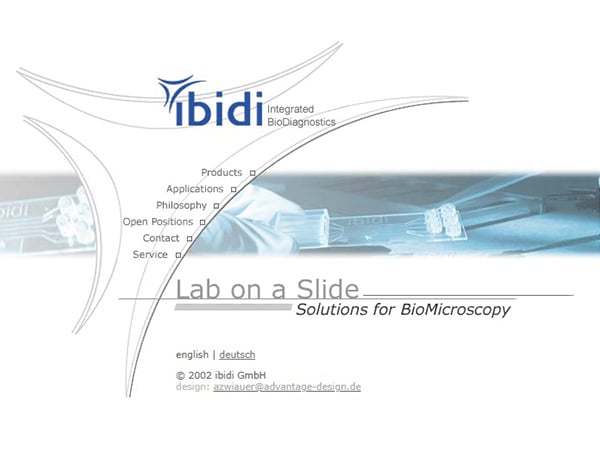
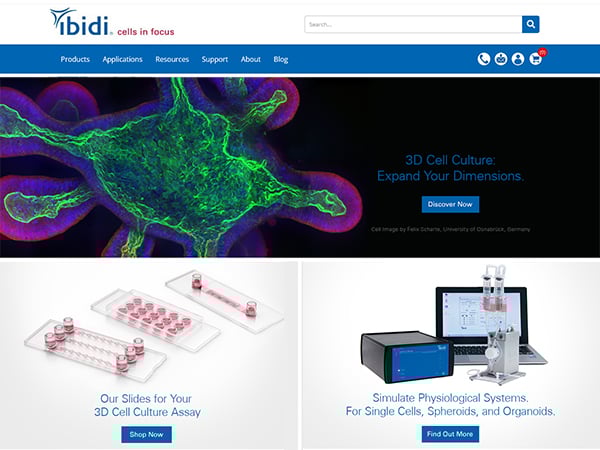
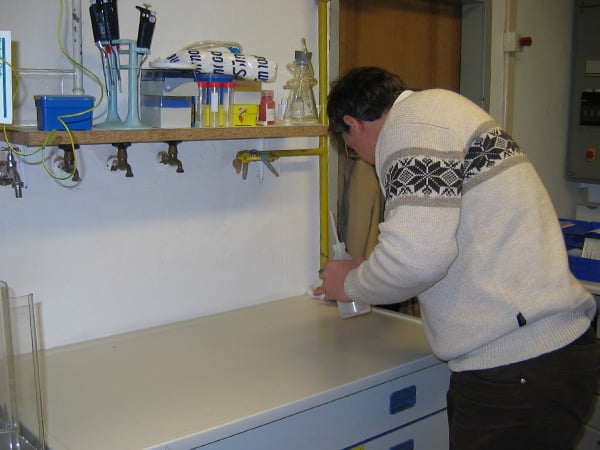
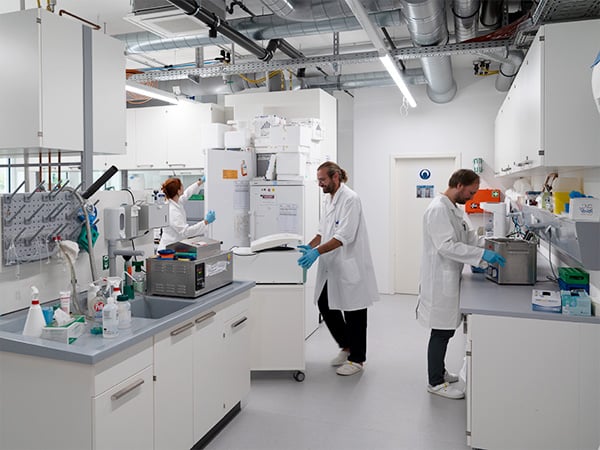
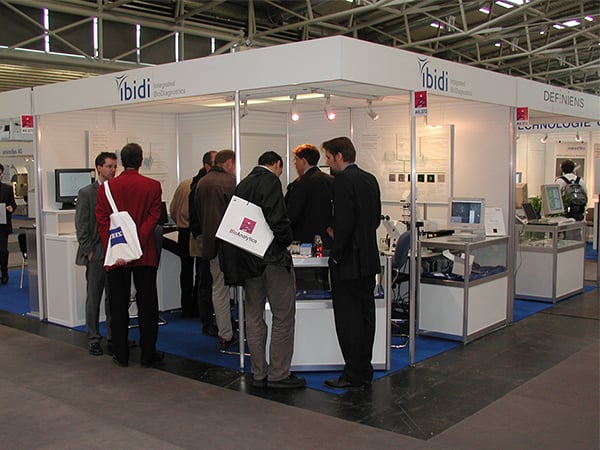
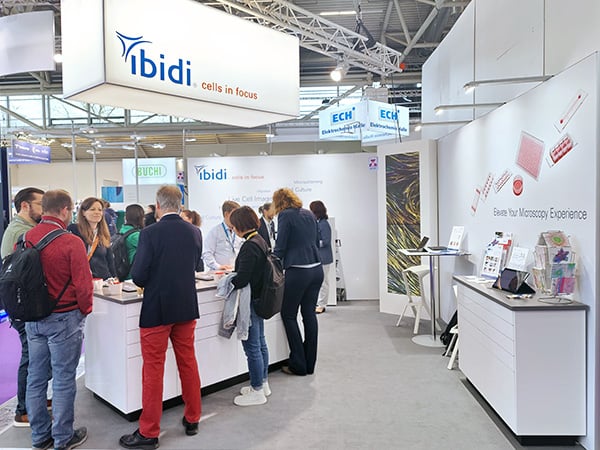
From a basement lab and hand cut prototypes to a global company supporting scientists worldwide. A lot has changed over 25 years. The curiosity, the problem solving, and the focus on better experiments have not. Slide through the past and the present and see how ibidi grew without losing what mattered most.
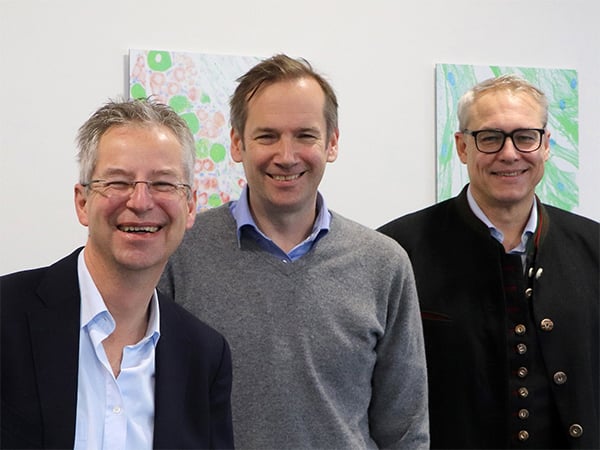
The Founders
The Website
The Lab
The Office
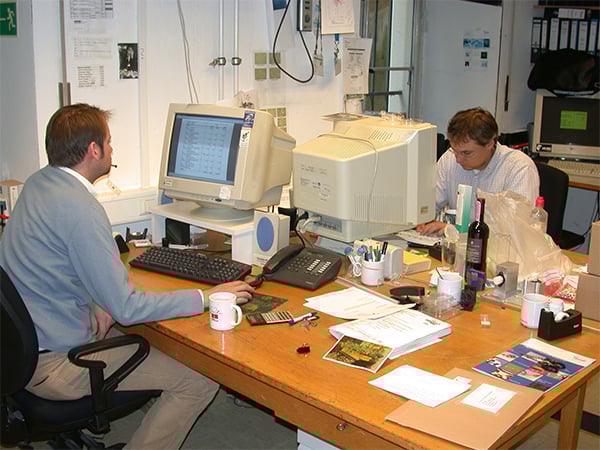
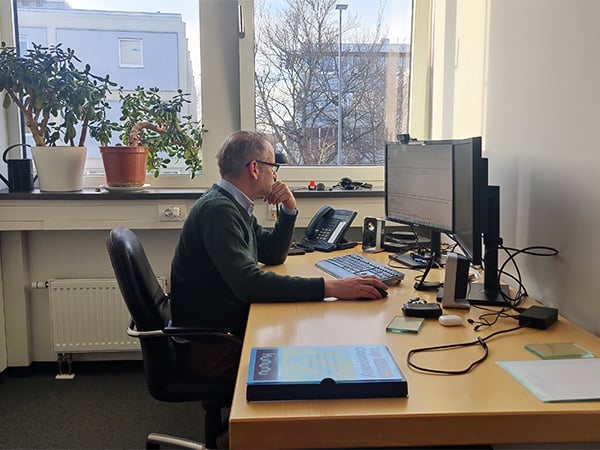
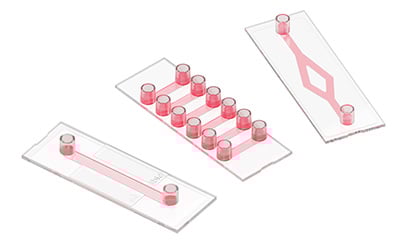
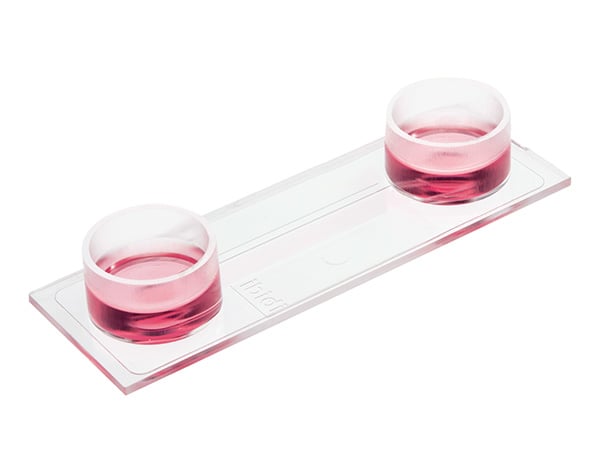
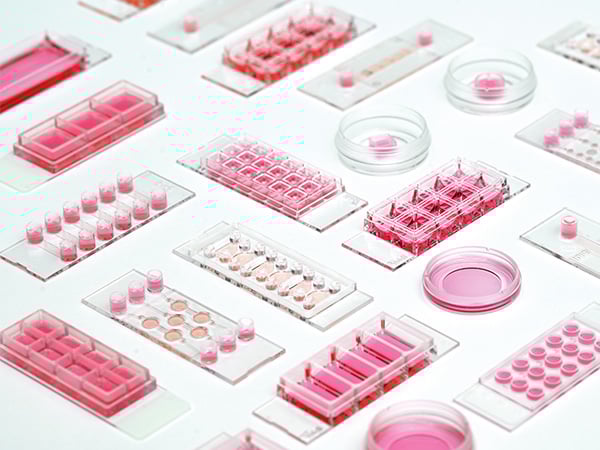
Labware
Production Team
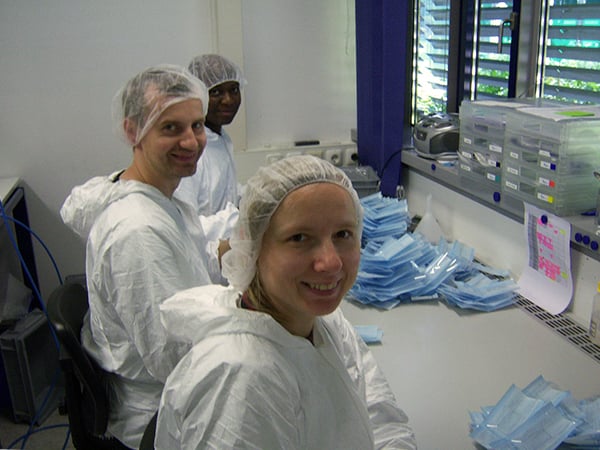
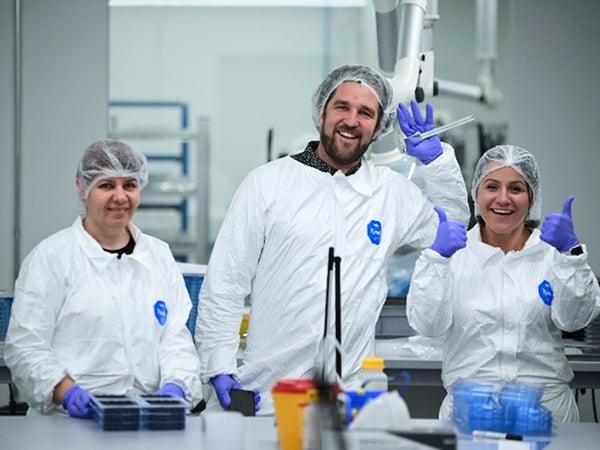
Shipping
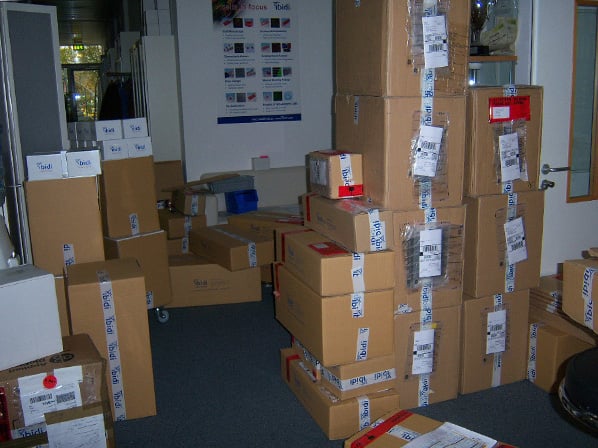
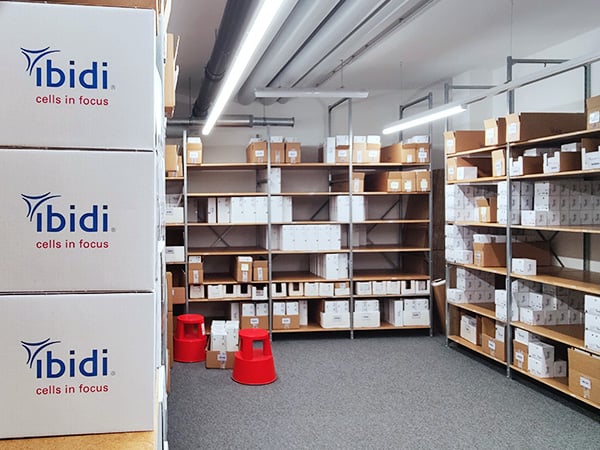
Trade Shows
How Product Ideas Came to Life
Most ibidi products were not born in meetings. They started in labs, hallways, or during conversations with researchers. In this section, our CEO Dr. Roman Zantl shares the real stories behind a few products and how practical lab problems turned into tools used worldwide.
µ-Slide 15 Well 3D
In the early days, one of our first customers, Prof. Stefan Zahler, ...
µ-Slide 15 Well 3D
In the early days, one of our first customers, Prof. Stefan Zahler, came to us with a practical problem. Standard 96 well plates, in his view, were simply not well suited for angiogenesis assays.
For these experiments, endothelial cells need to be seeded on a Matrigel layer at least 0.8 mm thick and as uniform as possible. In conventional wells, most of the required volume ends up forming a meniscus along the hydrophilic walls.
Stefan summed it up nicely. “It would be much better if the cells were in one flat plane”.
That comment sparked the idea of a well-in-well geometry. Inspired by a simple observation that a completely filled glass has a perfectly flat liquid surface, we designed a geometry that minimizes curvature and keeps the assay plane ideal for imaging.
The result was a slide built specifically for angiogenesis assays and quantitative microscopy. A small geometric change that made a big difference, and one that lives on today in the µ-Slide 15 Well 3D.
Culture-Inserts
During a visit to the University of Karlsruhe, a professor told us ...
Culture-Inserts
During a visit to the University of Karlsruhe, a professor told us about her work on tumor metastasis. She wanted to grow malignant and healthy cells right next to each other, close enough to interact but without mixing at the start.
At the time, we had already been experimenting with silicone adhesives. That led to one of those classic lab ideas where you simply try something and see what happens. We cut off a piece of a slightly larger plastic straw, added a tiny amount of silicone, and stuck it opening down onto a cell growth surface. To our surprise, it worked. One cell type grew inside the ring, the other around it. The cells stayed separate, adjacent, and perfectly positioned for interaction studies.
Not long after, we met a specialist in silicone processing who showed us how silicone parts could be molded and made naturally sticky using simple techniques. Suddenly, we could produce inserts in almost any shape and apply them like self-adhesive stamps.
What started with a plastic straw turned into a completely new product family. That is how the ibidi Culture-Inserts were born, driven by real scientific questions and a bit of creative improvisation.
ibidi Pump System
Our very first product was the µ-Slide I, similar to today’s ...
ibidi Pump System
Our very first product was the µ-Slide I, similar to today’s µ-Slide I Luer. When we showed it to cell biologists, the conversations often led to the same question: What happens if endothelial cells are cultured under flow instead of static conditions?
So, we tried it. We bought a large peristaltic pump, seeded endothelial cells in the channel, connected everything, and placed the setup in the incubator. The next morning, we were excited. And then very disappointed. The cells were gone.
That failure changed everything. We knew the solution had to be gentle, cool, and designed for life inside an incubator. The key idea came during a flight to the United States. Somewhere between takeoff and landing, the concept of gently moving liquid back and forth and turning it into a steady flow took shape. No heavy motors. No excess heat. Just movement that cells could tolerate.
The first prototype was anything but elegant. Modified lab tubes, borrowed parts, and a fair amount of improvisation. But it worked. Early users tested it, trusted it, and kept using it.
Over time, additional flow patterns were added to better reflect real blood vessels. What started as a failed experiment and an idea at cruising altitude became a system built around one simple principle. Happy cells lead to better science.
µ-Slide Chemotaxis
In 2003, biotechnology student Elias joined ibidi through a ...
µ-Slide Chemotaxis
In 2003, biotechnology student Elias joined ibidi through a research collaboration while still studying. His task sounded simple on paper. Could chemical gradients be created inside an existing µ-Slide I, and could cells be guided to follow them?
The answer was yes. But not easily.
Experiments worked, but they were fragile, hard to reproduce, and far from ideal for long-term observation. Instead of stopping there, Elias started sketching something new. A slide designed from the beginning around one key requirement: a stable gradient that stays put while cells do what cells do.
The result was a new geometry that allowed gradients to remain stable over long periods, making it possible to observe directed cell migration in real time under the microscope. Together with Dr. Pamela Zengel and Roman, and in close collaboration with researchers working on endothelial chemotaxis, the concept was refined, patented, and turned into a dedicated cell carrier system.
What started as a student project became a published method, a patented technology, and ultimately a product that many researchers still rely on today. Over time, the slide evolved from 2D to 3D, became easier to use, and grew with the needs of the community.
Award Hall of Fame
Great science rarely happens in isolation. Along the way, ibidi's work has been recognized by scientific, business, and public institutions for innovation, growth, and responsibility.
These awards are not the goal. They are milestones that reflect the trust of researchers, partners, and the wider life science community. Each one marks a moment where good ideas, solid engineering, and real-world impact came together.

Innovation & Technology Excellence

“Best OF” Industry Award (2012)
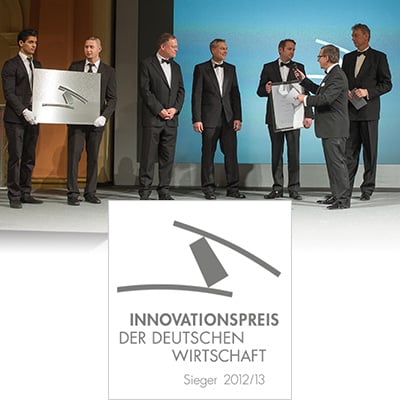
German Economy Innovation Award Competition (2012/13)
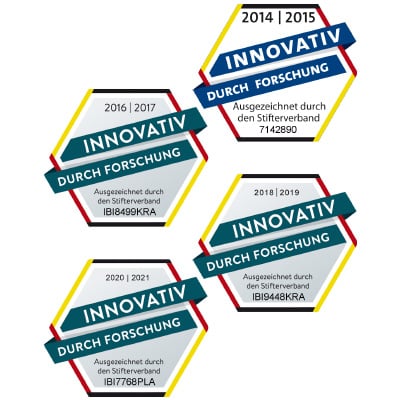
Innovative Through Research Seal of Quality (2014-2021)

Growth & Business Performance
Deloitte Technology Fast 50 Germany (2009–2012)
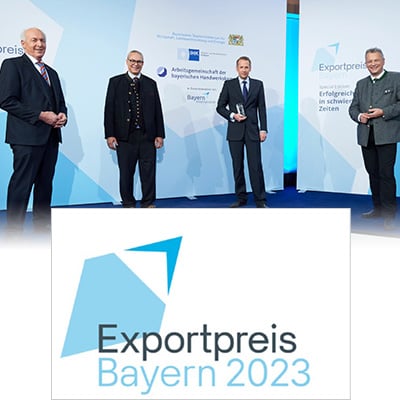
Export Award Bavaria (2021)
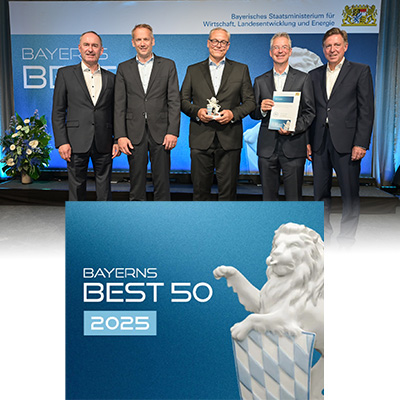
"Bavaria’s Best 50" State Award (2025)

Life Science & Healthcare Impact
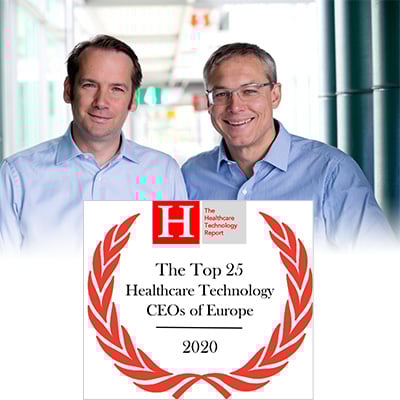
Top 25 Healthcare Technology CEOs Europe (2020)
Top 10 Virology Solution Providers in Europe (2021)
Top 10 Oncology Solution Providers in Europe (2023)

People, Collaboration & Ecosystem
Germany, Land of Ideas (2016)
German bAV Award (2023)
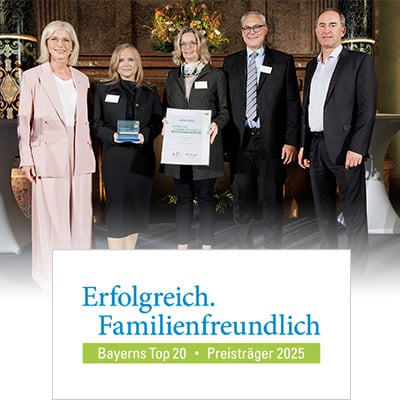
Successful. Family Friendly – Bavaria’s Top 20 (2025)
EcoVadis Bronze Medal for Sustainable Commitment (2025)
Photo Contest Highlights
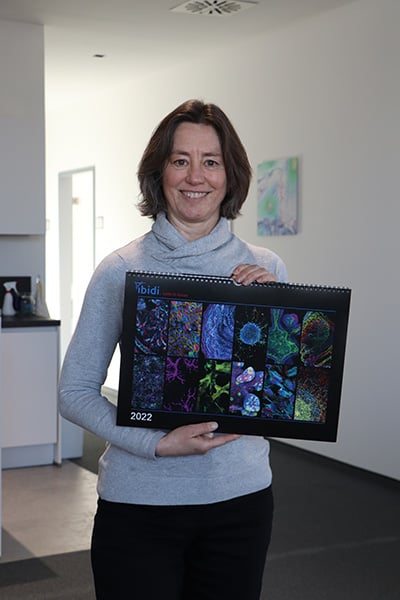
Cells rarely know they’re being photographed. Scientists do. Our Photo Contest brings together stunning images from labs worldwide, turning everyday research into something worth hanging on the wall. The contest is our way of celebrating not just beautiful pictures, but the scientists behind them and the moments when research pauses for a second and simply looks amazing.
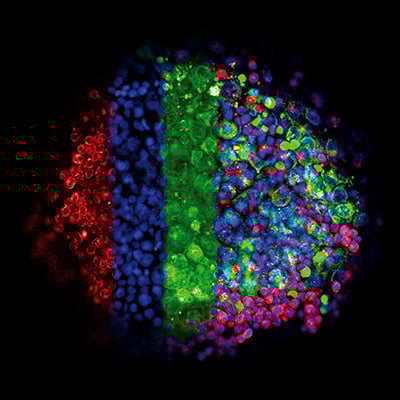
Gillian Ludwig, Daniel Nettersheim
Translational UroOncology, Department of Urology, University Hospital Düsseldorf, Germany
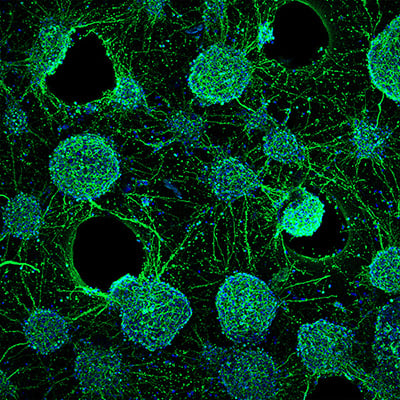
Joana Marques de Sousa
TEMA and CICECO, University of Aveiro, Portugal
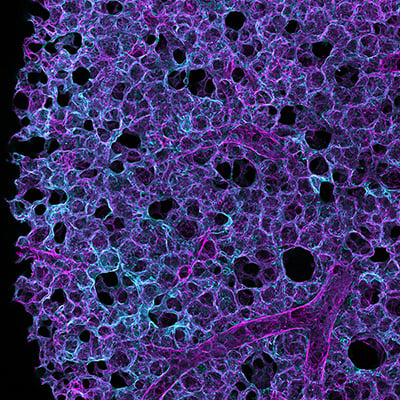
Jonas Stewen
Max Planck Institute for Molecular Biomedicine, Münster, Germany
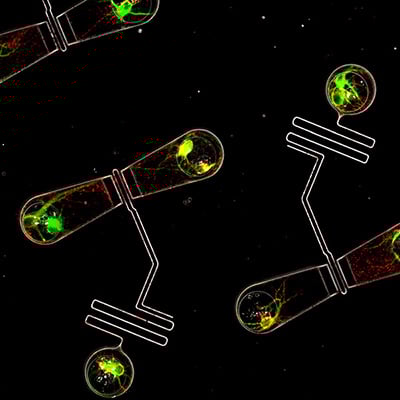
José Mateus 1,
Sean Weaver 2
1 i3S - Instituto de Investigação e Inovação em Saúde da Universidade do Porto, Portugal
2 ETH Zurich, Switzerland
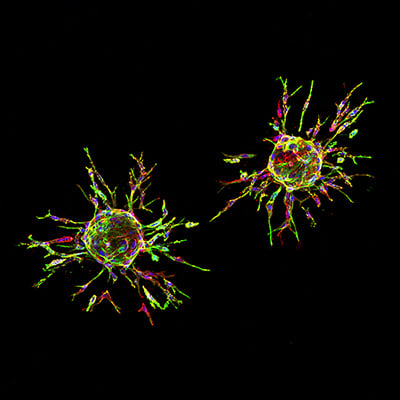
Juliette Vleeming
Institute of Biology Leiden, Leiden University, The Netherlands
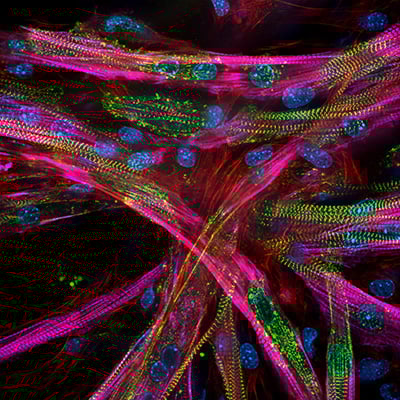
Leander Vonk
Amsterdam UMC, The Netherlands
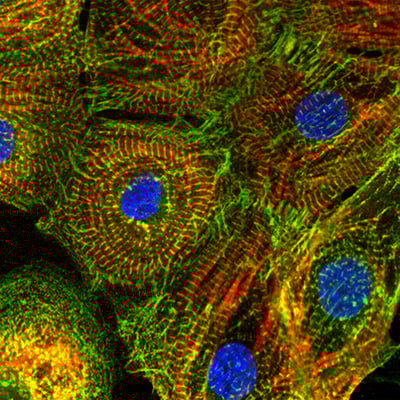
Remco Hoogervorst
Department of Physiology, Amsterdam University Medical Centers, The Netherlands
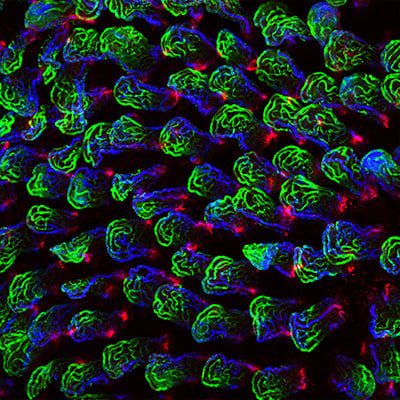
Rhyll Smythe
The Heart Research Institute, University of Sydney, Australia
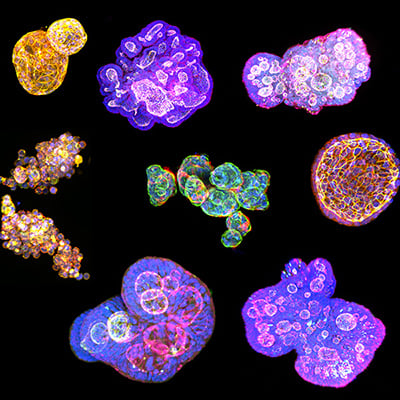
Sanika Jahagirdar
Cluster of Excellence Physics of Life, TU Dresden, Germany
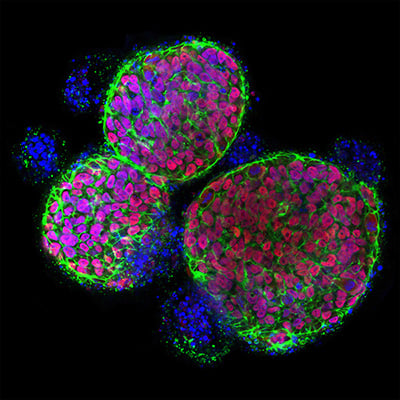
Syeda Inaas
University Hospital RWTH Aachen, Germany
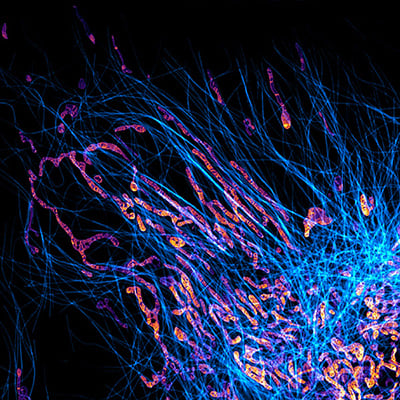
Till Stephan
Buchmann Institute for Molecular Life Sciences, Goethe University Frankfurt, Germany
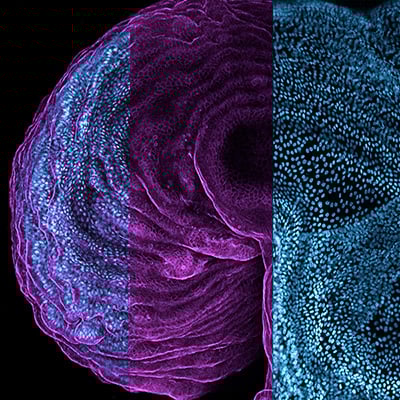
Veronika Bosáková, Jan Frič, Marco De Zuani
Cellular and Molecular Immunoregulation, International Clinical Research Center, St. Anne’s University Hospital, Brno, Czech Republic
ibidi in Numbers
Numbers are not the goal. They are the result. Our products travel far, our ideas travel even further, and our impact shows up every day in labs around the world. These numbers tell part of the story. The rest happens at the bench.
Memory Lane
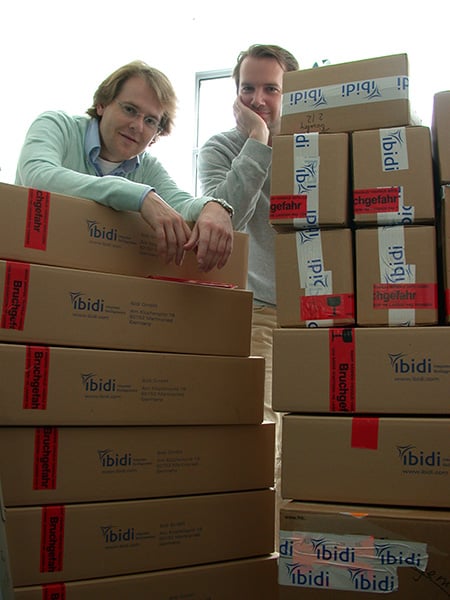
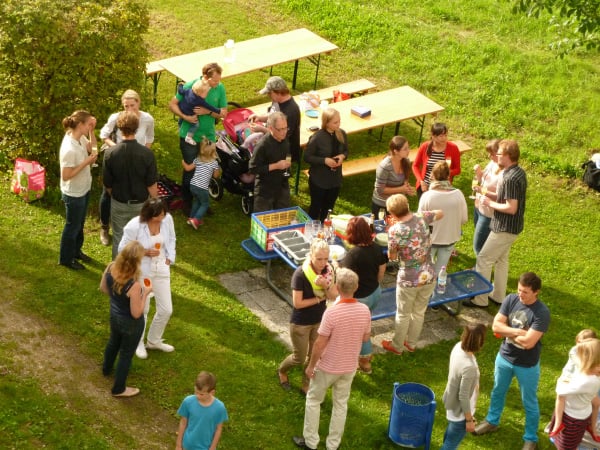
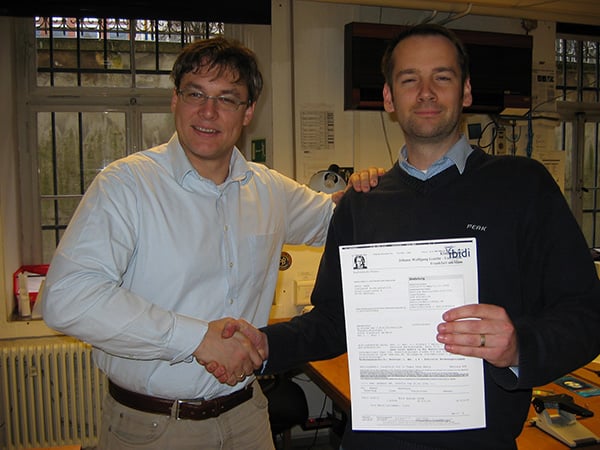
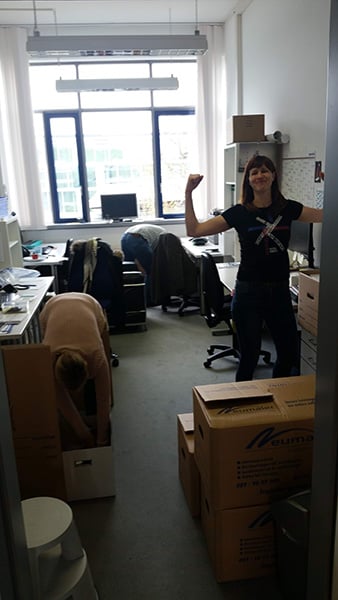
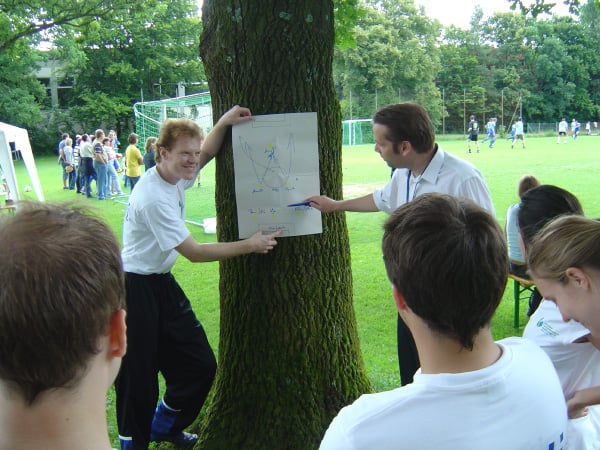
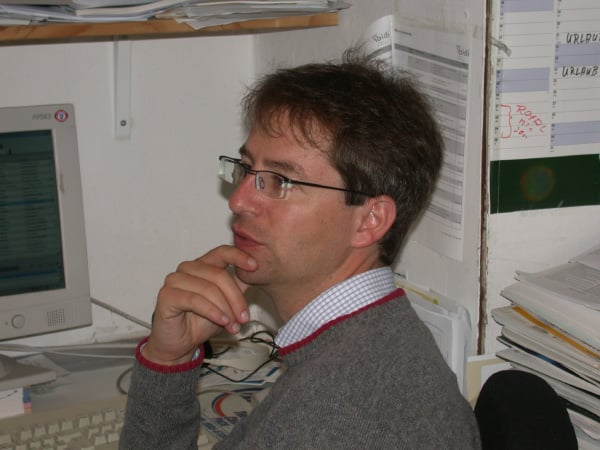
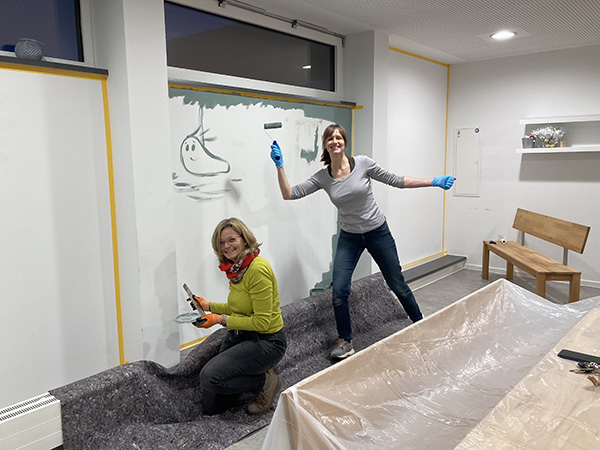
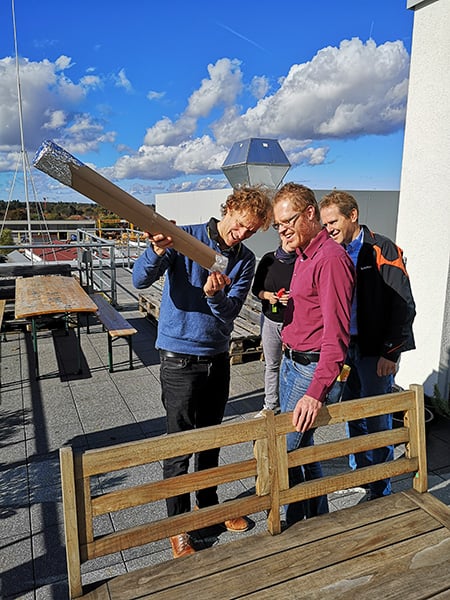
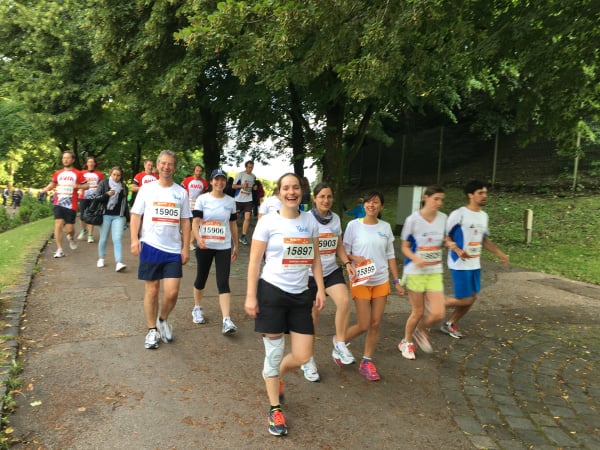
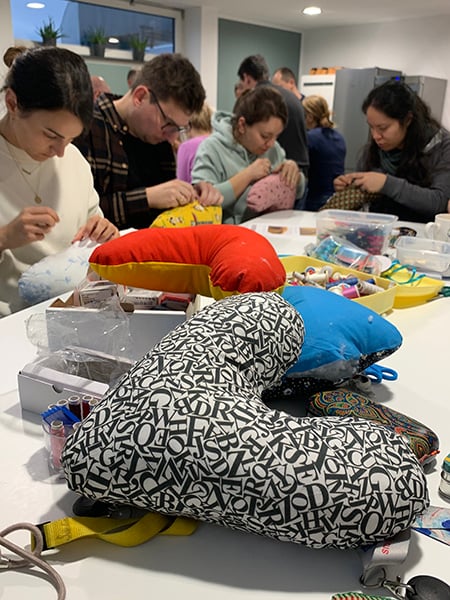
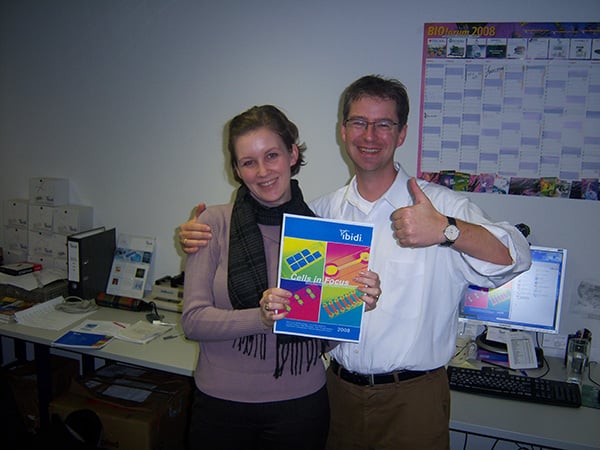
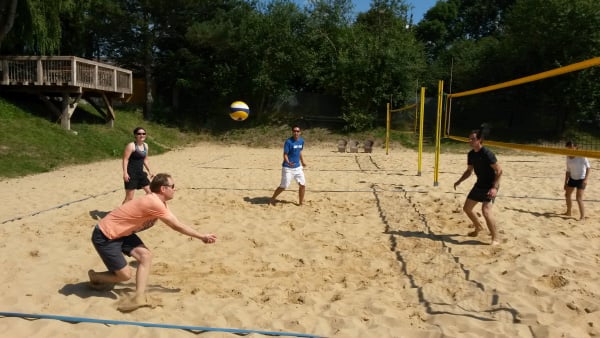
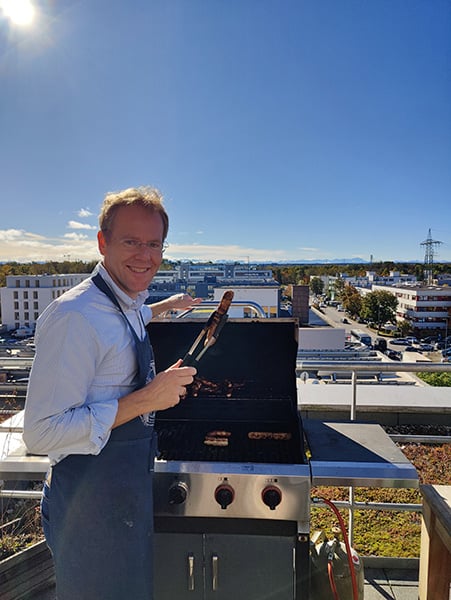
This is Memory Lane. A collection of moments from life at ibidi. Everyday scenes, team activities, shared moments, and everything in between. These images capture people doing what they do every day. Working together, organizing events, moving things around, laughing in the middle of a busy day, or simply spending time as a team. Just real moments that happened while building a company together.