



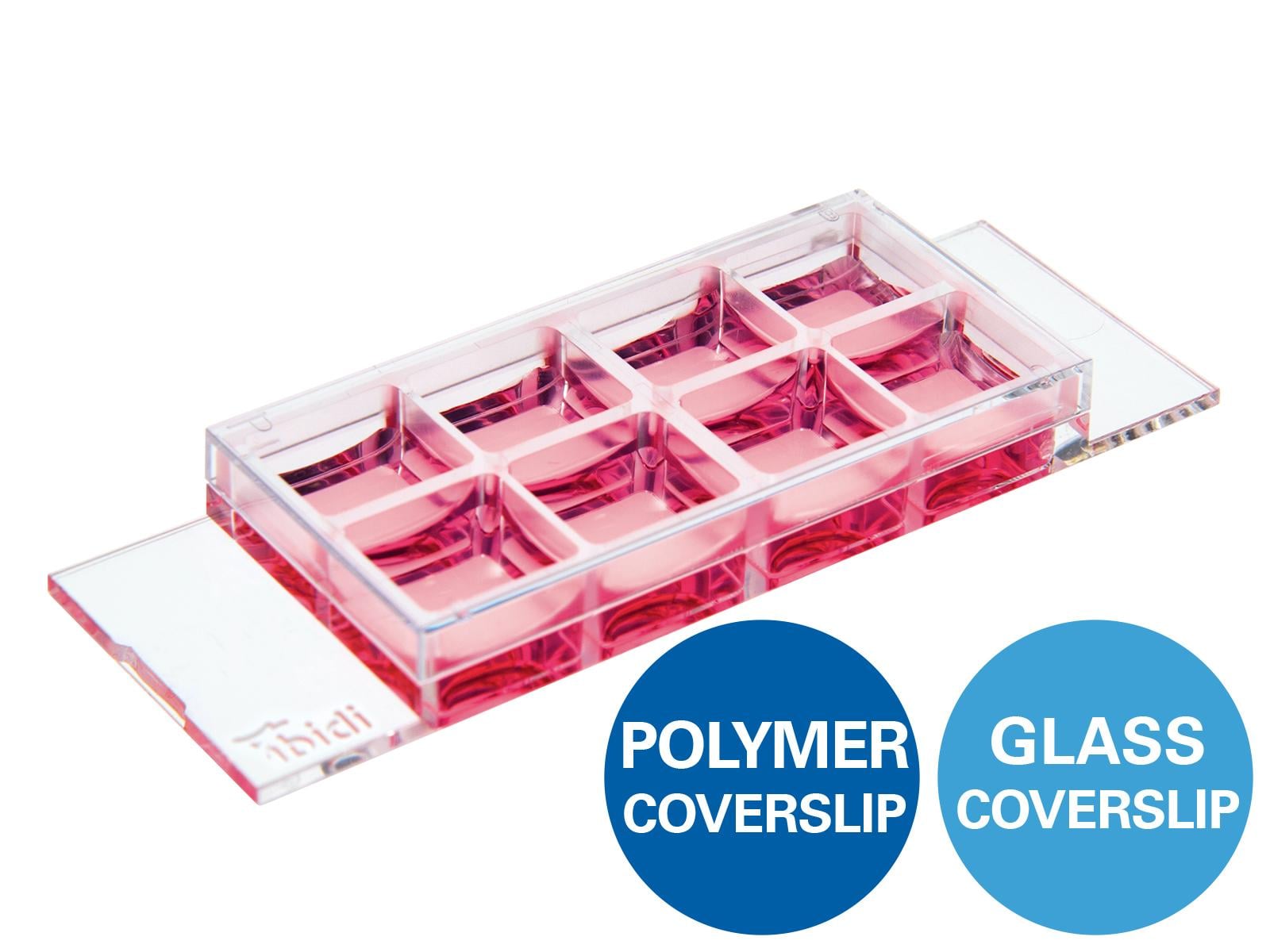



The Myth of a Perfect Experiment
ibidi Blog | June 25, 2026 | Abhishek Derle, ibidi GmbH
Ah, the perfect experiment. We’ve all dreamed of it. Clean Western blots, crisp fluorescent images, and a p-value below 0.05 to make your day. But if you’ve spent even a few hours in a biology lab, you know the truth: perfect experiments don’t exist.
Let’s face it. Biology is messy. Cells are alive, reagents have expiry dates, and humans, well, humans make mistakes. While we love planning experiments, booking instruments in advance, preparing every reagent freshly, and mentally rehearsing the workflow to avoid surprises, reality often laughs at our neat little plan.
But that’s the beauty of it. Variability, unpredictability, and even chaos make experiments fascinating, challenging, and yes, sometimes infuriating.
When Cells Have Their Own Agenda
Cells don’t follow instructions from your lab notebook. They grow at their own pace, respond to subtle environmental cues, and occasionally decide that today they will do something completely unexpected. You can set up identical conditions in three different wells and still observe three completely different responses. That’s biology for you.
Take, for example, a simple cell viability assay. You carefully plate your cells, add your reagents, and then a random well behaves unexpectedly, showing a completely different pattern. You could spend hours trying to figure out why, but in reality, you may never know the exact cause. It could be uneven cell seeding, unnoticed contamination, or a slight timing difference when adding the reagent to that particular well. Every variation, even one that seems inconsequential, can subtly affect the results and challenge our assumptions.
In many ways, these unpredictable cells are the teachers we never really asked for. They compel us to slow down, refine our observations, and develop a deeper understanding of the living systems we study. Each unexpected behavior is an invitation to ask why, to think critically, and to appreciate that variability is not a flaw but an essential feature of biology.
Pipettes, Reagents, and the Chaos in Between
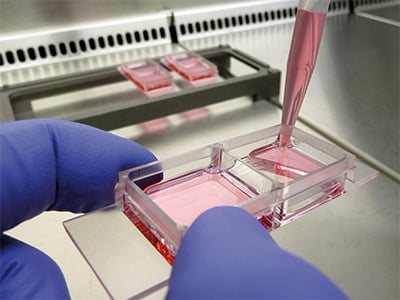
Even the most skilled scientist cannot escape occasional pipetting mistakes. A miscalibrated pipette, a reagent drop clinging stubbornly to the end of the tip, or a tiny bubble sneaking into a well can quietly affect your data.
Picture yourself on the bench loading a 384-well plate for an RT-PCR assay. Everything seems fine, you are moving along, and then it hits you. You have no idea which well received the last reagent addition. Should you add more, or leave it as it is? This is especially tricky when using a multi-channel pipette because now the stakes are higher. Later, you notice one column may have received slightly more reagent than the others. The discrepancy is small, but it shows up clearly in your data. You reflect on the hours spent planning, performing the assay, and analyzing the results, and you realize that perfection is a mirage.

Reagents, of course, have their own personalities. Temperature shifts, light exposure, or even subtle differences in handling can influence their activity. Even carefully stored batches may behave slightly differently. These minor variations often appear as unexpected noise, sometimes frustrating, sometimes surprisingly informative.
Instruments can cause headaches too. A Western blot protein transfer system might stop mid-run or transfer unevenly, causing inconsistent bands. A flow cytometer can halt due to a minor obstruction, leaving you with incomplete data. An incubator CO2 sensor malfunction can subtly alter cell growth conditions without immediate notice. Small malfunctions like these can waste samples, disrupt planning, and add stress, especially when technical support is not immediately available. Even the most carefully planned experiment can be affected by these instrument quirks, reminding us that hardware is just as important as reagents and cells.
Learning to work with these subtleties of pipetting, reagents, and instruments helps you develop practical skills, patience, and attention to detail. These are essential qualities in biomedical research, and they make navigating experiments more realistic.
The Human Factor
Even with a careful plan, humans are part of the equation. Fatigue, stress, or simply juggling too many tasks at once can subtly influence how an experiment is conducted. An antibody left out for too long, a timing step missed, or a wrong molarity calculation can alter your results. Being aware of these factors helps us plan better, stay present, and anticipate where mistakes might occur.
Our brains, hands, and moods all play a role in how experiments turn out. For example, in a flow cytometry assay, forgetting to properly mix a cell suspension or adding staining antibodies in the wrong order can produce uneven signals and misleading readouts. In a migration assay, a small misalignment of the insert or uneven application of the chemoattractant can drastically affect cell movement. Even in immunofluorescence, a brief delay in washing steps or uneven antibody incubation can lead to unexpected background or uneven staining.
These small human errors happen in every lab and with every assay. They remind us that as researchers, we must respect timing, consistency, and precision. Interestingly, human errors can sometimes reveal hidden biological phenomena that would otherwise go unnoticed. In this way, human error is not merely a nuisance but can act as a catalyst for discovery, pointing us toward unexpected insights and teaching us to observe more carefully.
Data: Messy, Meaningful, and Marvelous
Modern biological experiments are complex. From co-cultures to organ-on-chip systems and high-content imaging, even the most carefully planned assays bring together countless moving parts. Even when cells cooperate and you do everything by the book, data will almost always include noise and outliers. These surprises make experiment design more challenging but also more interesting. No two experiments ever behave exactly the same, and that unpredictability keeps scientists on their toes.
Statistical methods, replicates, and controls exist not to punish us for imperfection but to help make sense of the chaos. They turn what appears to be random variation into meaningful information. Every anomaly, every unexpected result, is a chance to refine your methods, test new hypotheses, and notice details that no textbook could ever teach. It is less about perfect results and more about understanding what the system is really telling you.

When a so-called “failed” experiment finally clicks, it can be surprisingly enlightening. You learn to be flexible, attentive, and creative. You notice patterns you might have missed, anticipate pitfalls next time, and get a real feel for how biology behaves in the real world. In short, messy data is part of the adventure, and embracing it makes experiments not just rigorous, but fun and fascinating.
Final Thoughts
So, the final verdict? Perfection in biology is a myth. Cells do their own thing, reagents have moods, humans have limits, and experimental systems are inherently complex. Every experiment, no matter how messy, is a chance to learn something new. Sometimes the surprises frustrate you, sometimes they make you laugh out loud, and sometimes they lead to insights you never expected.
The next time your experiment refuses to cooperate, take a deep breath, maybe grab another coffee, and remember that science is rarely tidy. The little mistakes, the odd results, and the unexpected twists are all part of the adventure. These are the stories you will tell your colleagues, your friends, or the students you mentor one day. After all, if everything went perfectly, what would you complain about at your next lab outing or conference?
At the end of the day, it is not about perfect results. It is about curiosity, persistence, and the thrill of seeing biology in action. Even when things go off plan, that is where the fun really happens. Science is a roller coaster. Don’t worry about what will happen. Hold on tight and enjoy the ride.

Article written by Abhishek Derle, PhD
ibidi GmbH | June 25, 2026
Biomedical scientist with expertise in cancer biology, metabolism research, and advanced microscopy. Abhishek received his PhD in Biomedical Sciences and Oncology, with research focusing on intracellular trafficking, metabolic regulation, and cellular disease mechanisms.
 (1)
(1)  (0)
(0)