



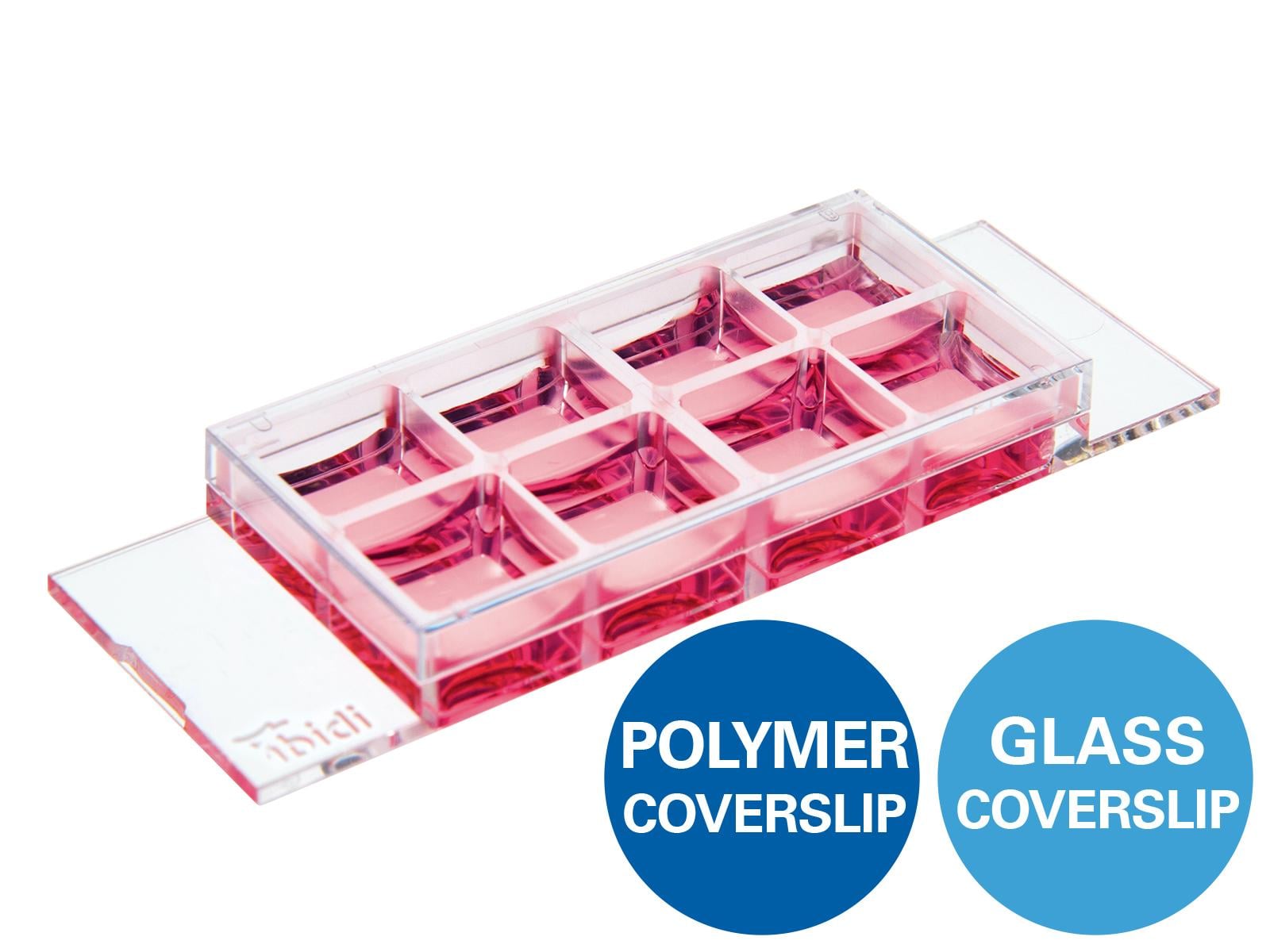
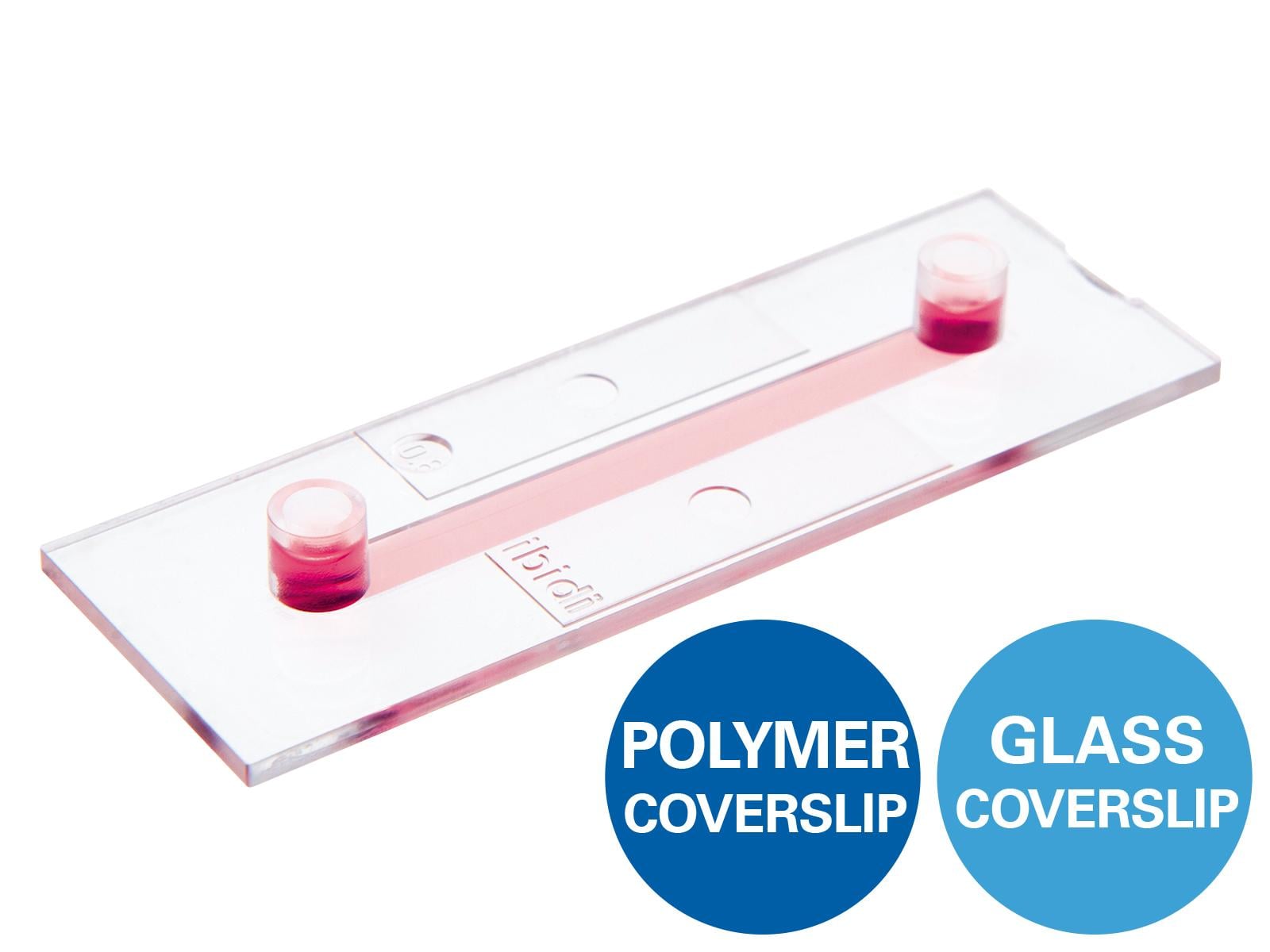
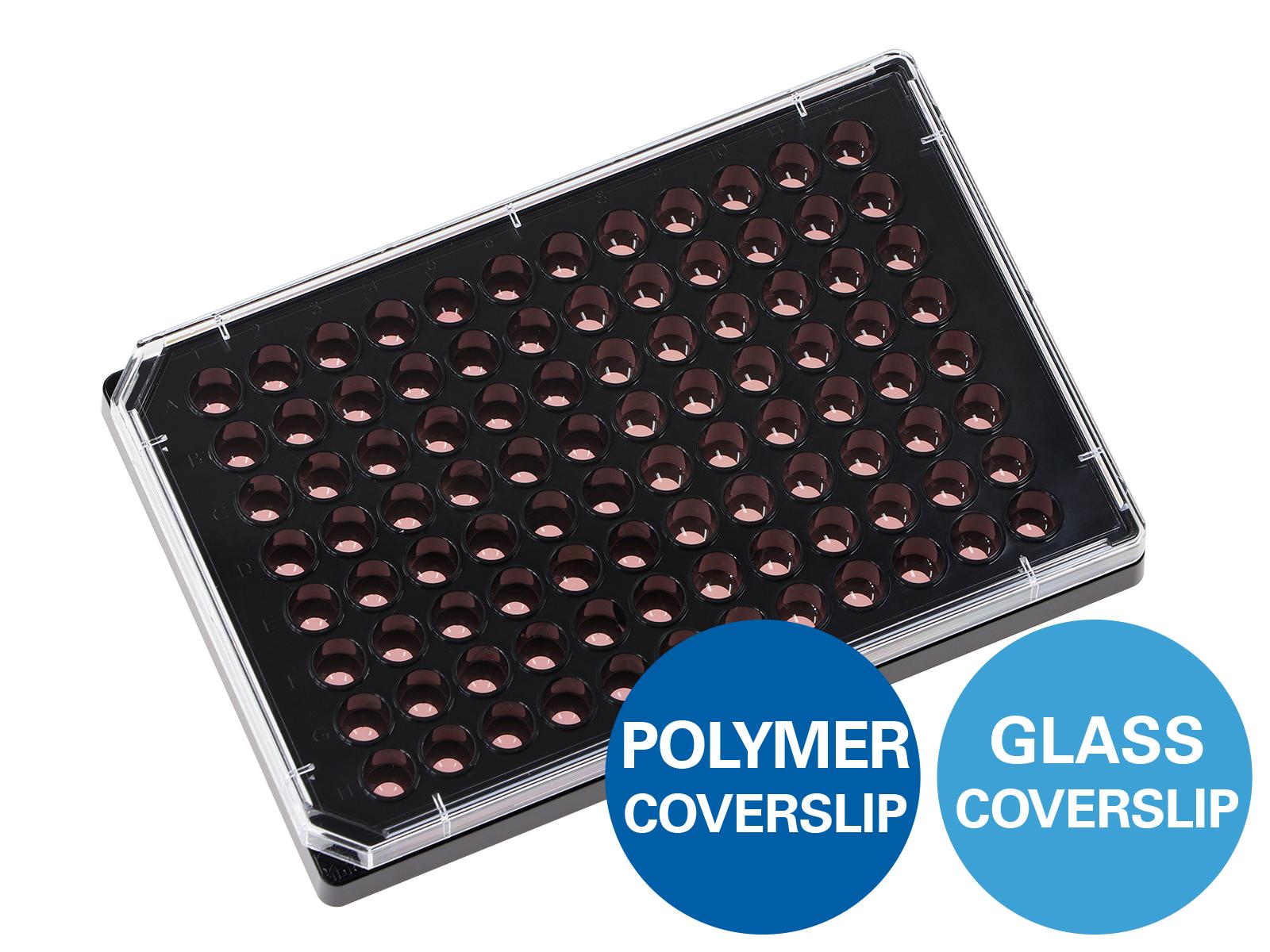
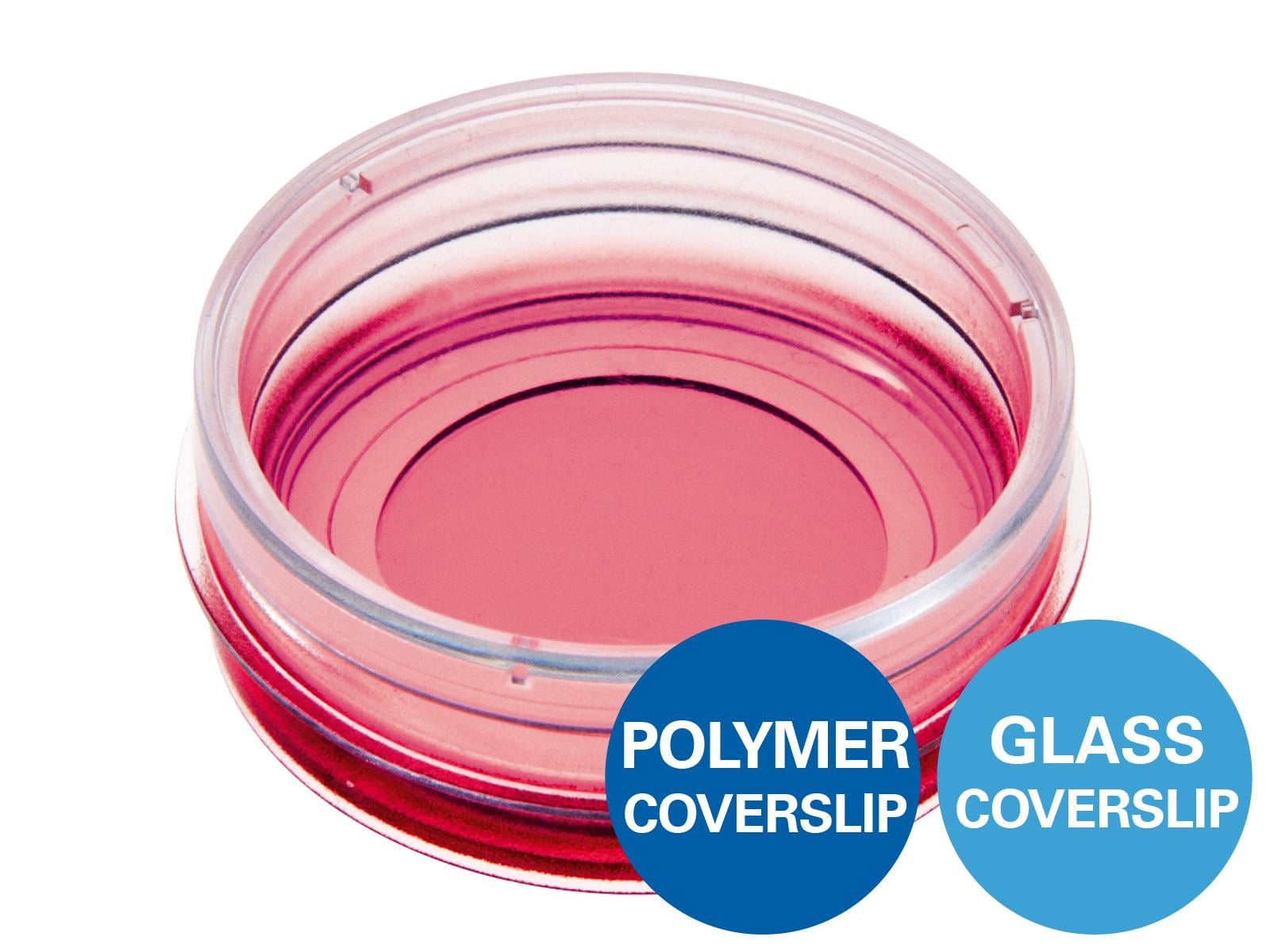
How to Set Up a Cell Culture Under Flow and Shear Stress Experiment
A cell culture under flow experiment requires more than a pump and a channel slide. The biological question, cell type, target wall shear stress, flow profile, medium viscosity, channel geometry, perfusion set, coating, experiment duration, and endpoint readout all influence the optimal setup. This guide helps you plan a reproducible flow assay, from cell seeding and shear stress calculation to live cell imaging, staining, and downstream analysis.
At a Glance: Flow Experiment Setup
A controlled flow assay combines biological planning with technical setup selection. The following overview summarizes the main components that define a reproducible cell culture under flow or wall shear stress experiment.
| Setup Component | What It Defines | Why It Matters |
|---|---|---|
| Pump system | Flow type, flow stability, and experiment duration | Determines whether unidirectional, pulsatile, oscillatory, short-term, or long-term flow can be applied |
| Channel slide | Channel geometry, growth area, channel height, and microscopy format | Defines the cell culture format and strongly influences the achievable shear stress range |
| Perfusion set | Tubing diameter, tube length, reservoir size, and working volume | Affects medium volume, reagent consumption, and achievable flow and shear stress conditions |
| Medium viscosity | Resistance of the liquid to flow | Required for accurate shear stress calculation |
| Environmental control | Temperature, CO₂/O₂, and humidity | Supports stable long-term live cell imaging and cell physiology |
| Readout method | Live imaging, immunofluorescence, qPCR, western blot, FACS, or functional assays | Influences the required cell number, slide format, assay duration, and endpoint handling |
For the biological background of wall shear stress, see Cells Under Shear Stress: Wall Shear Stress, Flow Types, and Applications.
Step 1: Define the Biological Question
Before selecting the technical setup, define the biological aim of the experiment. The cell type, physiological shear stress range, flow profile, assay duration, and endpoint readout determine which pump system, channel slide, perfusion set, and coating are suitable.
| Question | Why It Matters |
|---|---|
| Which cell type will be investigated? | The cell type defines the required coating, attachment conditions, physiological shear stress range, and endpoint readout. |
| Which shear stress level is biologically relevant? | The target wall shear stress determines the required flow rate, channel geometry, tubing, and medium viscosity. |
| Which flow type is required? | Unidirectional, pulsatile, oscillatory, or non-uniform flow profiles require different pump capabilities and experimental settings. |
| How long will the experiment last? | Short-term assays, long-term conditioning, and multi-day live cell imaging have different requirements for medium volume and environmental control. |
| Which endpoint or readout will be used? | Live cell imaging, immunofluorescence, qPCR, western blot, and FACS require different cell numbers and handling workflows. |
| Which coating is needed for cell attachment? | Surface coating affects cell adhesion, monolayer stability, and the ability of cells to withstand shear stress. |
| How much medium, reagent, and cell material is available? | Limited reagent or cell numbers influence the choice of perfusion set, reservoir size, and channel format. |
Use the ibidi Flow Calculator to calculate flow rate and shear stress for selected ibidi Channel Slides.
Step 2: Choose the Flow Type and Shear Stress Level
The target shear stress and flow profile should be selected according to the cell type, biological question, and physiological reference range. In many endothelial cell experiments, unidirectional laminar flow is used for steady wall shear stress, while pulsatile or oscillatory flow can be used to model dynamic or disturbed-flow-like conditions.
| Experimental Aim | Typical Flow Profile | Setup Implication |
|---|---|---|
| Endothelial cell conditioning under steady shear stress | Unidirectional laminar flow | Requires stable long-term flow and a channel slide suitable for the target shear stress range |
| Arterial-like dynamic stimulation | Pulsatile laminar flow | Requires a pump system capable of programmed pulsatile flow |
| Disturbed-flow-like conditions | Oscillatory laminar flow | Requires controlled flow reversal and stable timing of direction changes |
| Spatial shear stress gradients | Non-uniform laminar flow | Requires a channel geometry that generates spatial differences in shear stress |
| Rolling and adhesion assays | Usually unidirectional laminar flow | Requires defined shear rate, stable flow, and a suitable surface coating or cell layer |
For a detailed explanation of wall shear stress, flow types, and biological applications, see Cells Under Shear Stress: Wall Shear Stress, Flow Types, and Applications.
Step 3: Select the Pump System
Several pump systems can be used to generate flow in channel-based cell culture assays. The optimal pump system depends on the required flow type, experiment duration, medium volume, shear stress stability, and compatibility with microscopy or incubation.
| Pump Type | Best Used For | Limitations | Typical Fit |
|---|---|---|---|
| Syringe pump | Short-term flow assays with defined medium conditions and slow to moderate flow rates | Limited medium volume; long-term experiments may require complex handling or push-and-pull configurations | Short-term assays |
| Peristaltic pump | Long-term circulating flow with continuous medium recirculation | Can generate pulsation; mechanical stress on non-attached cells or particles in the circuit can be problematic | Long-term circulation with limitations |
| ibidi Pump System | Defined shear stress, long-term cell culture under flow, live cell imaging, and unidirectional, pulsatile, or oscillatory flow profiles | Requires compatible ibidi flow accessories and appropriate setup planning | Controlled ibidi shear stress assays |
For product details, compatible accessories, and technical specifications, see the ibidi Pump System.
Step 4: Select the Channel Slide and Perfusion Set
The channel slide defines the cell culture geometry, channel height, growth area, and imaging format. The perfusion set defines tubing diameter, tube length, reservoir volume, and working volume. Together, the slide and perfusion set determine which shear stress ranges can be achieved with the selected pump system.
| Selection Parameter | What to Consider | Practical Implication |
|---|---|---|
| Channel height | Lower channel heights enable higher shear stress at lower flow rates | Important for high-shear endothelial assays |
| Channel geometry | Straight, multi-channel, or y-shaped geometries support different assay designs | Defines whether the assay is optimized for homogeneous flow, parallel experiments, or spatial shear stress gradients |
| Growth area and cell number | Endpoint assays such as qPCR, western blot, and FACS require sufficient cell material | Influences the choice of slide format and number of channels |
| Tubing inner diameter | Different inner diameters influence working volume and achievable flow conditions | Important for reagent consumption and shear stress range |
| Reservoir volume | Long-term experiments require sufficient medium volume and stable culture conditions | Important for multi-day flow conditioning and live cell imaging |
| Surface coating | The coating must support stable cell adhesion before and during flow exposure | Critical for monolayer stability under shear stress |
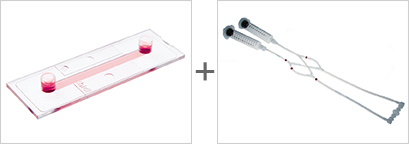
Use the Perfusion Set and µ-Slide Selection Guide to identify suitable combinations of perfusion set, tubing, reservoir volume, and channel slide.
Common Channel Slides for Flow Assays
| Channel Slide Type | Best Used For |
|---|---|
| µ-Slide I Luer | Single-channel flow assays with defined wall shear stress and microscopy access |
| µ-Slide VI 0.1 | Parallel assays with low channel height and higher shear stress at lower flow rates |
| µ-Slide VI | Parallel flow assays in multiple channels |
| µ-Slide y-shaped | Non-uniform flow and spatial shear stress gradient studies |
| sticky-Slide I Luer | Flow assays with custom bottom materials or specialized substrates |
| sticky-Slide VI 0.4 | Parallel flow assays with user-defined bottom materials |
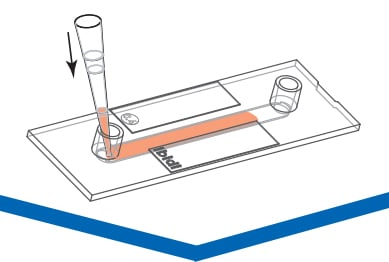
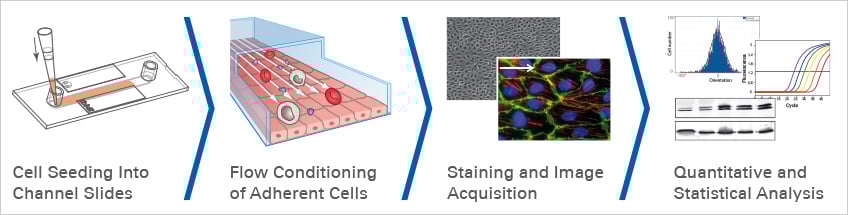
Cells are seeded into the selected channel slide before the flow experiment starts. After sufficient attachment and, if required, coating optimization, the slide can be connected to the flow setup. Stable cell attachment is essential because the cell layer must withstand the selected wall shear stress during the experiment.
The required seeding density and attachment time depend on the cell type, channel geometry, surface coating, and planned shear stress level. For endpoint assays, the required cell number should be considered already during slide selection.
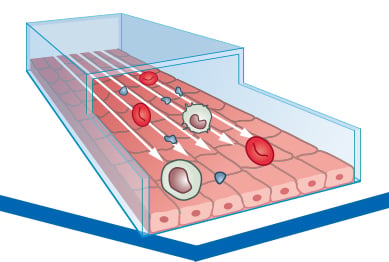
After the channel slide is connected to the pump system and perfusion set, flow can be applied according to the selected flow profile and shear stress level. Under flow, the cell culture medium is pumped through the channel slide, generating wall shear stress that can influence cell behavior, morphology, and physiology.
During long-term experiments, stable temperature, gas concentration, and humidity are important for maintaining cell physiology and reproducible assay conditions.
| Requirement | Recommended ibidi Solution | Role in the Experiment |
|---|---|---|
| Defined flow and wall shear stress | ibidi Pump System | Generates controlled unidirectional, pulsatile, or oscillatory flow profiles |
| Stable live cell imaging conditions | ibidi Stage Top Incubation Systems | Maintains environmental conditions during microscopy-based flow assays |
| Shear stress calculation | ibidi Flow Calculator | Supports calculation of flow rate and shear stress for ibidi Channel Slides |
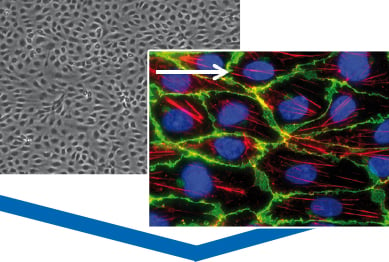
Depending on the experimental question, cells can be analyzed directly in the channel slide by live cell imaging, fixed and stained for immunofluorescence microscopy, or harvested for downstream endpoint analysis. The intended readout should be considered during setup planning because it affects the required cell number, slide format, assay duration, and handling workflow.
| Readout | Setup Consideration |
|---|---|
| Live cell imaging | Requires microscopy-compatible slides and stable environmental control during flow exposure |
| Immunofluorescence staining | Can be performed directly in compatible channel slides after flow conditioning |
| qPCR or western blot | Requires sufficient cell material and may influence the choice of channel format or number of parallel channels |
| FACS | Requires enough cells for harvesting and downstream analysis |
| Rolling and adhesion analysis | Requires defined shear rate, suitable surface coating or cell layer, and microscopy-based observation |
Workflow Overview
The complete workflow links biological assay planning with the technical flow setup. Define the cell model and shear stress conditions first, then select the pump system, channel slide, perfusion set, and readout method before starting the experiment.
| Workflow Step | Main Goal | Key Decision |
|---|---|---|
| 1. Define the biological question | Clarify the cell type, shear stress range, and readout | Which biological response should be analyzed? |
| 2. Choose flow type and shear stress | Select the mechanical stimulus applied to the cells | Which flow profile is biologically relevant? |
| 3. Select pump system | Generate the required flow profile and experiment duration | Is short-term, long-term, pulsatile, or oscillatory flow needed? |
| 4. Select slide and perfusion set | Define channel geometry, medium volume, and achievable shear stress | Which slide and tubing combination fits the experiment? |
| 5. Seed cells | Create a stable cell layer before flow exposure | Which coating, density, and attachment time are required? |
| 6. Apply flow | Expose cells to defined flow and shear stress conditions | Which flow profile and duration should be used? |
| 7. Analyze cells | Perform imaging, staining, or endpoint analysis | Which readout determines the required cell number and workflow? |
Frequently Asked Questions About Setting Up Cell Culture Under Flow Experiments
What do I need to set up a cell culture under flow experiment?
A typical setup includes a pump system, a suitable channel slide, a perfusion set, cell culture medium with known viscosity, appropriate coating, and a defined readout method. For live cell imaging, stable environmental control for temperature, CO₂/O₂, and humidity is also important.
How do I choose the right shear stress level?
The shear stress level should be selected according to the cell type, tissue context, vessel type, and biological question. Physiological reference values and literature data can guide the first setup, but preliminary experiments may be needed to identify the relevant response range.
Which pump system is suitable for long-term shear stress assays?
Long-term shear stress assays require stable flow, sufficient medium volume, and reliable environmental conditions. The ibidi Pump System is designed for defined shear stress experiments and can generate unidirectional, pulsatile, or oscillatory flow profiles in compatible ibidi flow setups.
Which channel slide should I use for a flow assay?
The choice of channel slide depends on the required shear stress range, channel geometry, growth area, number of parallel conditions, imaging requirements, and endpoint readout. Straight channel slides are suitable for homogeneous shear stress, while y-shaped geometries can be used for non-uniform flow studies.
Why does medium viscosity matter for shear stress calculation?
Medium viscosity determines how flow rate translates into wall shear stress in a channel. A correct viscosity value is therefore needed for accurate shear stress calculation, especially when using media with supplements or non-standard fluid properties.
Can I perform live cell imaging during a flow experiment?
Yes. Live cell imaging can be performed during flow experiments when the channel slide is microscopy-compatible and the setup provides stable temperature, gas concentration, and humidity. Environmental control is especially important for long-term time-lapse experiments.
Which readouts can be used after flow conditioning?
Depending on the experimental goal, flow-conditioned cells can be analyzed by live cell imaging, immunofluorescence staining, qPCR, western blot, FACS, or functional assays such as rolling and adhesion analysis.
When should I use the ibidi Flow Calculator?
The ibidi Flow Calculator should be used during setup planning to calculate the flow rate needed to reach a target shear stress in selected ibidi Channel Slides. This helps align the pump settings, channel geometry, and medium viscosity with the biological aim of the experiment.