



Cell Culture Under Flow: Experimental Workflow
A cell culture under flow and shear stress experiment requires a defined biological question, a suitable cell type and coating, a target wall shear stress, a compatible flow profile, and a setup that combines pump system, perfusion set, channel slide, and endpoint readout. This guide helps you plan the complete workflow, from shear stress calculation and cell seeding to flow conditioning, live cell imaging, staining, and downstream analysis.
How to Plan Your Flow Assay Setup
A reproducible flow assay setup starts with the biological question and then translates the target shear stress and flow profile into the required pump system, Channel Slide, Perfusion Set, and readout workflow.
Flow Assay Setup at a Glance
- Biological model: Define the cell type, coating, endpoint, and assay duration to determine attachment conditions, cell number, and readout strategy.
- Shear stress range: Select the physiological or experimental target shear stress to define the required flow rate, channel geometry, and medium viscosity.
- Flow profile: Choose unidirectional, pulsatile, oscillatory, or non-uniform flow according to the pump requirements and biological stimulation pattern.
- Technical setup: Select the pump type, Perfusion Set, tubing diameter, reservoir size, and Channel Slide to define achievable flow conditions and working volume.
- Readout: Plan live cell imaging, immunofluorescence, qPCR, western blot, FACS, or functional assays to define microscope compatibility, cell number, and downstream handling.
| Setup Parameter | What It Defines | Why It Matters |
|---|---|---|
| Flow profile, flow stability, experiment duration, and compatibility with microscopy or incubator-based setups | The pump determines whether unidirectional, pulsatile, oscillatory, short-term, or long-term flow conditions can be applied reproducibly. |
| Tubing inner diameter, tube length, working volume, and available medium volume | Tubing and reservoir size influence achievable flow conditions, reagent consumption, medium availability, and suitability for short-term or long-term flow experiments. |
Slide type | Channel height, growth area, channel geometry, optical format, and cell attachment conditions | The Channel Slide defines the achievable shear stress range, cell number, imaging compatibility, and whether the setup supports homogeneous flow, parallel experiments, or spatial shear stress gradients. |
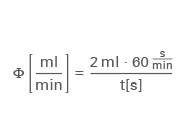
Flow rate | The volume of medium moving through the channel per unit time | Flow rate is required for shear stress calculation and must be selected together with channel geometry and medium viscosity. See Application Note 11 or use the ibidi Flow Calculator. |
Biological and Experimental Parameters
Before setting up the experiment, define the biological model, target shear stress, flow profile, and planned readout. These choices determine the required technical setup, including pump system, channel slide, perfusion set, medium viscosity, coating, and assay duration.
The table below summarizes how each parameter influences setup selection, shear stress calculation, and downstream analysis.
| Parameter | Main Setup Consequence |
|---|---|
| Cell type | Defines channel geometry, coating, attachment conditions, cell density, physiological shear stress range, and endpoint readout. |
| Typical shear stress level of the cell type | Defines pump settings, channel geometry, tubing, flow rate, and the biologically relevant shear stress range. |
| Type of shear stress | Defines whether unidirectional, pulsatile, oscillatory, or non-uniform flow is needed. Learn more about different types of shear stress and suitable pump systems. |
| Cell culture medium and viscosity | Viscosity is required for accurate shear stress calculation and influences how flow rate translates into wall shear stress. See Application Note 11: "Shear Stress and Shear Rates for ibidi µ-Slides" (PDF). |
| Available medium, supplements, and cell number | Influences reservoir size, tubing size, working volume, slide format, and the number of channels or samples that can be used. See the Perfusion Set Selection Guide. |
| Experiment duration | Defines whether the setup must support short-term flow, long-term conditioning, sufficient medium volume, and stable environmental control. Compare the pump systems and their applications. |
| One-way or circular setup | Determines whether defined medium conditions or recirculating medium conditioning are needed and influences the choice of pump system. Compare the pump systems and their applications. |
| Required coating | Supports optimal cell attachment, growth, and monolayer stability before and during flow exposure. |
| Reagent availability and cost | Influences tubing size, reservoir volume, working volume, and overall reagent consumption. See the Perfusion Set Selection Guide. |
| Endpoint analysis | Defines the required cell number, growth area, slide format, assay duration, and downstream handling for qPCR, western blot, FACS, immunofluorescence staining, or other readouts. |
Choose Your Flow Assay Setup by Application
The optimal setup depends on the biological question, flow profile, shear stress level, assay duration, and readout. For detailed biological background and application examples, see the corresponding flow application sections.
| Application Goal | Application Background | Typical Setup Consideration |
|---|---|---|
| Endothelial cell conditioning under steady shear stress | Read about endothelial cell conditioning under shear stress | Long-term unidirectional laminar flow, suitable Channel Slide, stable temperature and gas conditions |
| Rolling and adhesion assays | Read about rolling and adhesion assays | Defined shear rate, microscopy-compatible channel geometry, suitable coating or cell layer |
| Pulsatile shear stress experiments | Read about pulsatile laminar flow | Programmable dynamic flow profile and a pump system capable of pulsatile flow |
| Oscillatory or disturbed-flow-like experiments | Read about disturbed flow and atherosclerosis models | Controlled change of flow direction and stable timing of oscillatory flow conditions |
| Spatial shear stress gradient studies | Read about non-uniform laminar flow | Channel geometry that generates non-uniform flow across the cell layer, e.g., µ-Slide y-shaped |
The Optimal Pump System for Your Experiment
Several pump systems are available on the market. Their different properties make them suitable for specific experimental requirements.
A syringe pump consists of a syringe, which is mounted onto a device that moves the plunger at a defined velocity. The outlet of the syringe can be connected to a tubing and a slide to create a flow in the slide. This easy-to-use device is mainly suitable for short-term experiments, where a relatively low medium volume and a slow to moderate flow rate are needed. More complex devices can also generate a circulating medium flow over the cells.
A peristaltic pump consists of a rotor with several contact points to the inserted tubing. The coils squeeze the tubing and thereby move the medium forward. The peristaltic pump is suitable for long-term flow in parallel flow chambers.
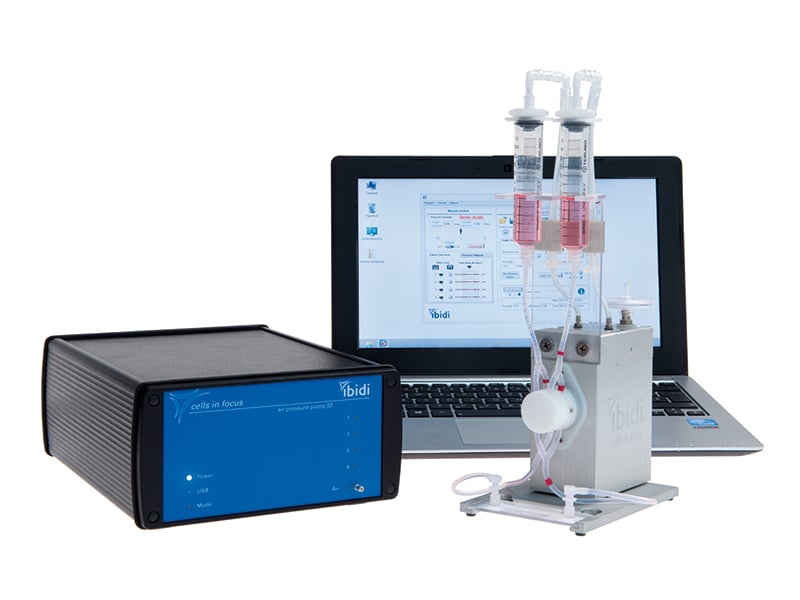
The ibidi Pump System generates a flow by applying an air pressure onto the medium-filled reservoirs. By recirculation of the medium using a special switching pattern, a constant unidirectional flow is generated. This makes it an ideal setup for applying defined shear stress in long-term cell culture. Using the ibidi Pump System, it is possible to simulate continuous and pulsatile laminar flow, as well as oscillatory flow.
The table below compares different pump systems and their suitability for common flow types and experimental requirements:
| Parameter | Syringe Pump | Peristaltic Pump | ibidi Pump System |
|---|---|---|---|
| Possible Flow Types | |||
| Circulating flow | Yes (only with push-and-pull pumps) | Yes | Yes |
| Long-term unidirectional flow | Yes (limited by volume) | Yes | Yes |
| Short-term flow | Yes | Yes (with limitations) | Yes (with limitations) |
| Pulsatile flow for simulating heartbeats | No | No | Yes |
| Oscillatory flow for disturbed-flow-like conditions | Yes | No | Yes |
| Pump System Characteristics | |||
| Pulsation | Almost none (only initial pulse) | Yes (undefined pulsation via drive shaft, depending on rotor type) | Almost none (only during valve activation) |
| Mechanical stress during pumping on non-attached cells held in a reservoir | Almost none (sedimentation can be a problem) | Strong | Very low |
| Combinable with microscopy | Yes | Difficult due to pulsation | Yes |
| Parallel experiments possible | Yes | Yes | Yes |
| Setup within an incubator | Difficult | Difficult | Easy |
| Long-term experiments possible with low medium volume | No | Yes | Yes |
| Programmability | Yes | Yes | Yes |
In general, syringe pumps are mainly suitable for short-term flow experiments with limited medium volume, while peristaltic pumps can support long-term circulation but may introduce pulsation. The ibidi Pump System is designed for controlled cell culture under flow, including long-term unidirectional flow, pulsatile flow, oscillatory flow, and microscopy-compatible experiments.
If you have further questions, please contact ibidi or your local distributor for a personal consultation.
Select the Shear Stress Range, Channel Slide, and Perfusion Set
Selecting the optimal setup for a flow assay starts with the biological shear stress range and then translates this target into a suitable flow rate, channel geometry, Perfusion Set, and Channel Slide. The final setup should match the cell type, assay duration, medium viscosity, available cell number, and endpoint readout.
Define the Target Shear Stress Range
Depending on vessel type and tissue, physiological shear stress in a human body can range from almost 0 to over 100 dyn/cm². Information about the physiological shear stress that applies for your cell type of interest can be found here and in the literature.
It is crucial to perform preliminary experiments to determine at which shear stress level and after which time of conditioning the investigated protein or pathway responds to the shear stress stimulus. Since the restructuring of the cell layer takes at least several days, it may be necessary to extend the conditioning period accordingly.
Find detailed information about the shear stress-regulated factors and the corresponding response times in this review:
P.F. Davies. Flow-Mediated Endothelial Mechanotransduction. Physiological Reviews, 1995, 10.1152/physrev.1995.75.3.519
read abstract
Calculate Flow Rate and Shear Stress
The target shear stress cannot be defined by flow rate alone. It also depends on the channel geometry and medium viscosity. The ibidi Flow Calculator helps calculate the required flow rate for selected ibidi Channel Slides and supports planning of reproducible wall shear stress experiments.
ibidi Flow Calculator
Simple calculation tool
for your flow experiments
| Parameter | Why It Matters for Shear Stress Planning |
|---|---|
| Target shear stress | Defines the mechanical stimulus applied to the cells |
| Channel geometry | Channel height and width are key factors that determine the wall shear stress generated at a given flow rate |
| Medium viscosity | Required for accurate shear stress calculation |
| Flow rate | Determines the volume of medium moving through the channel over time |
| Assay duration | Influences medium volume, reservoir size, cell conditioning time, and environmental control |
| Endpoint readout | Influences the required cell number, growth area, and slide format |
Choose the Channel Slide and Perfusion Set
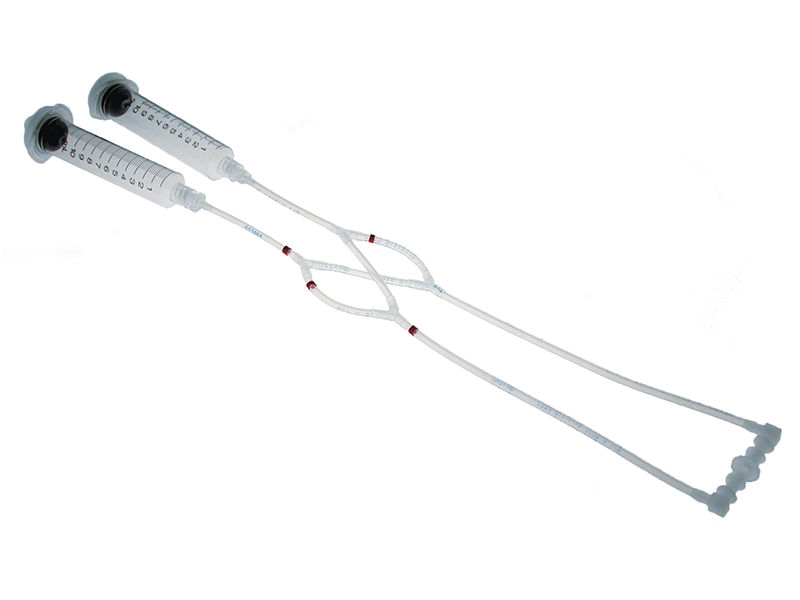
ibidi provides several Channel Slides with different volumes and geometries. These can be combined with the different ibidi Perfusion Sets, which are offered with varying inner diameters and tube lengths.
The achievable shear stress range depends on the selected Channel Slide, Perfusion Set, medium viscosity, and flow rate. In general, ibidi Channel Slides with lower channel heights are suitable for higher shear stress conditions, while larger channel heights and suitable Perfusion Set configurations support lower shear stress ranges. The selected Perfusion Set also influences the working volume, tubing resistance, and available reservoir volume.
With each combination of a Perfusion Set and Channel Slide, a specific shear stress range can be achieved using the ibidi Pump System. Depending on the shear stress your setup requires, choose a suitable combination according to the Perfusion Set and µ-Slide Selection Guide.
General rules:
- Higher shear stresses are created in Channel Slides with lower channels.
- Lower shear stresses are created with smaller inner diameters in the tubing.
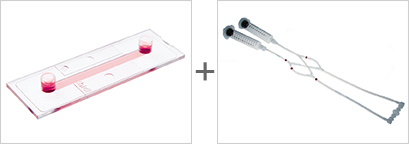
Explore the detailed Perfusion Set and µ-Slide Selection Guide to compare tubing inner diameters, tube lengths, reservoir volumes, working volumes, and compatible Channel Slide combinations.
| Selection Factor | Effect on the Flow Assay | Why It Matters for Shear Stress |
|---|---|---|
| Channel height | Defines the distance between the cell layer and the upper channel wall | Lower channel heights enable higher wall shear stress at a given flow rate |
| Channel geometry | Defines whether the assay uses a straight, multi-channel, or y-shaped format | Determines whether the setup is suited for homogeneous flow, parallel experiments, or spatial shear stress gradients |
| Tubing inner diameter | Influences the flow conditions generated by the pump system | Different inner diameters support different shear stress and working-volume requirements |
| Tube length | Influences the total working volume of the setup | Important for reagent consumption, medium availability, and long-term flow experiments |
| Reservoir size | Defines the available medium volume during the experiment | Important for assay duration, medium conditioning, and reagent use |
| Growth area and cell number | Defines how many cells can be cultured and analyzed | Relevant for endpoint readouts such as qPCR, western blot, FACS, and immunofluorescence staining |
| Surface or coating | Supports cell attachment before flow exposure | Critical for stable monolayers and cell layers that must withstand wall shear stress |
Which Shear Stress Ranges Can Be Achieved?
| Target Shear Stress Condition | Typical Setup Consideration | Relevant ibidi Components |
|---|---|---|
| Low shear stress | Often requires larger channel heights, suitable tubing dimensions, and controlled low flow rates | Compatible Channel Slides, Perfusion Sets with suitable tubing and reservoir volume, ibidi Pump System |
| Medium shear stress | Requires a balanced combination of channel geometry, flow rate, and medium viscosity | µ-Slide I Luer, µ-Slide VI, suitable Perfusion Sets, ibidi Pump System |
| High shear stress | Usually requires lower channel heights and flow conditions adapted to the selected channel geometry | Low-channel-height Channel Slides, suitable Perfusion Sets, ibidi Pump System |
| Spatially varying shear stress | Requires a channel geometry that creates non-uniform flow across the cell layer | µ-Slide y-shaped with suitable Perfusion Set and ibidi Pump System |
The exact shear stress range should be calculated for the specific combination of Channel Slide, Perfusion Set, medium viscosity, and flow rate. Use the ibidi Flow Calculator and the detailed selection guide to identify suitable setup combinations.
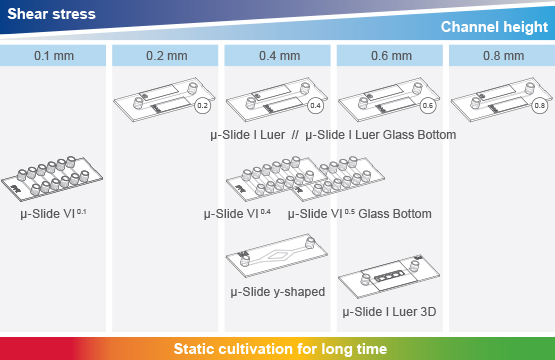
Suitability of Channel Slides for Different Shear Stress Ranges
The suitability of Channel Slides for different shear stress ranges depends on the channel height.
Please note: due to the very low channel height of 0.2–0.8 mm, the suitability of the Channel Slides for static cell culture is limited. Demanding, fast proliferating cells might be starving already after several hours if no fresh medium is added!
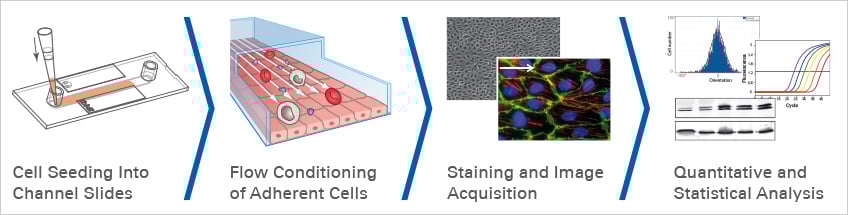
Cell Seeding Into Channel Slides
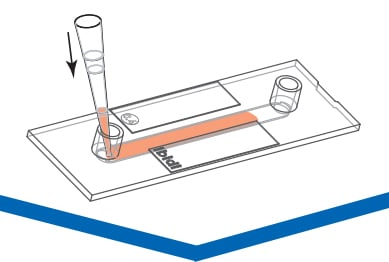
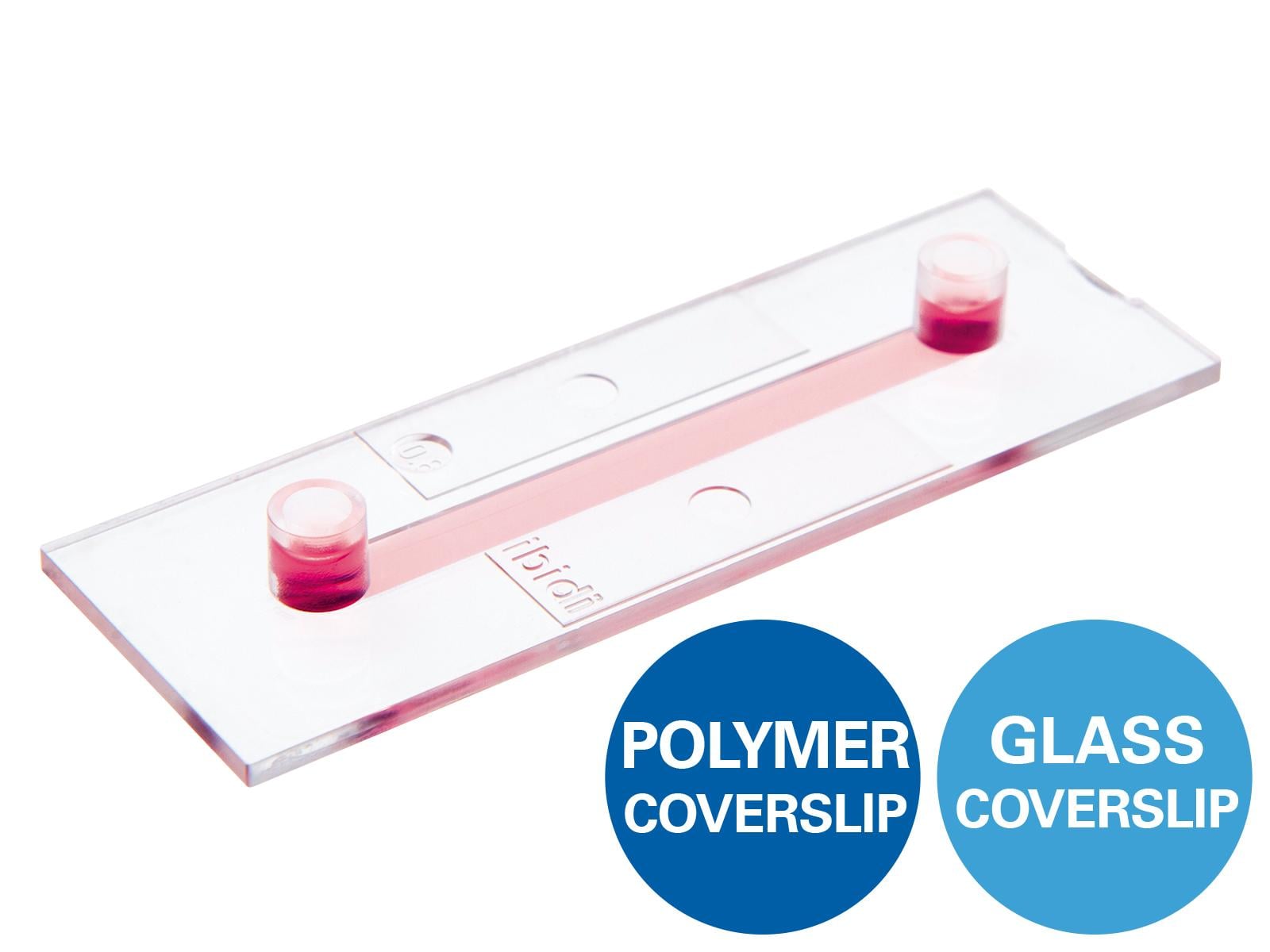
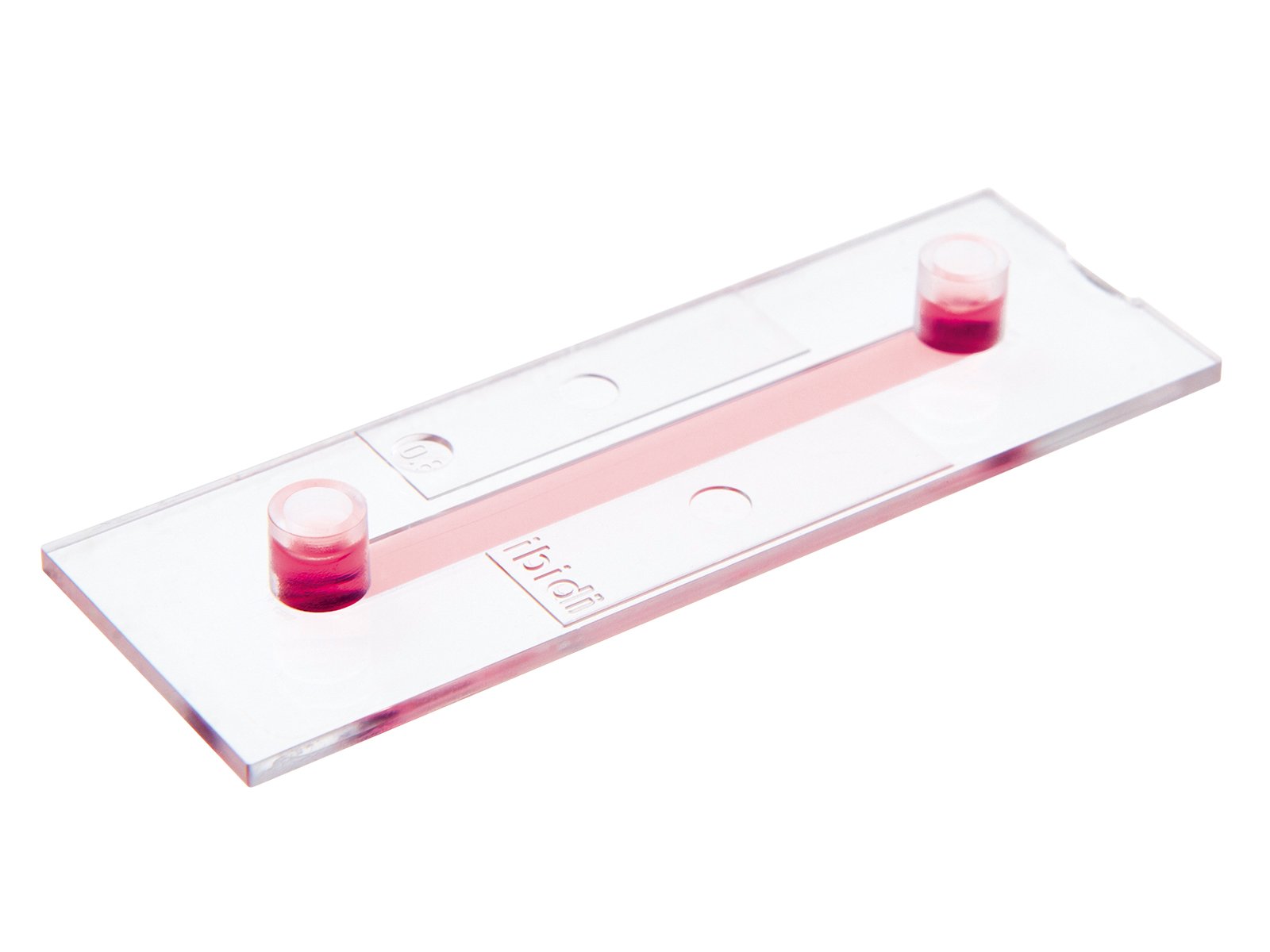
The cell suspension is filled into the channel slide. After cell attachment, the flow experiment can be started. ibidi provides channel slides with different channel heights and geometries, which are suitable for various experimental conditions. For details, please refer to the chapter "Select the Shear Stress Range, Channel Slide, and Perfusion Set".
| Slide Format | Typical Use |
|---|---|
| µ-Slide I Luer | Single-channel flow assays with defined shear stress |
| µ-Slide VI | Parallel flow assays with multiple channels |
| µ-Slide y-shaped | Non-uniform flow and spatial shear stress gradients |
| sticky-Slides | Flow assays with user-defined bottom materials or substrates |
Flow Conditioning of Adherent Cells
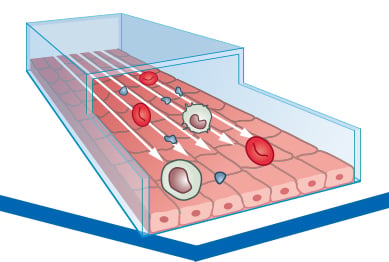
After connecting the channel slide to the ibidi Pump System, the flow can be applied. Under flow, the cell culture medium is continuously pumped through the channel slide. This results in shear stress that influences the cell behavior and physiology. The flow type, flow rate, and the assay duration depend on the experimental setup. Find more details about how to plan the optimal experimental setup here.
| Parameter | Should Be Defined Before Starting Flow |
|---|---|
| Flow type | Unidirectional, pulsatile, oscillatory, or non-uniform flow |
| Flow rate | Calculated according to target shear stress, channel geometry, and medium viscosity |
| Assay duration | Minutes, hours, days, or weeks, depending on the cellular response of interest |
| Environmental control | Temperature, gas composition, and humidity for live cell experiments |
Imaging and Data Analysis
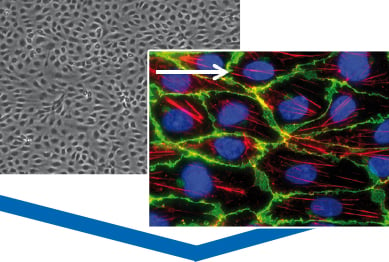
Using live cell microscopy, images or videos of the flow-conditioned cell layer can be directly acquired within the channel slide. Further, immunofluorescence staining and subsequent imaging can be performed directly in the channel slide.
After the flow experiment, the cells can be easily analyzed using, e.g., Western blot, qPCR, FACS, and more downstream methods.
ibidi Solutions for Flow Assay Setup and Analysis
The choice of pump system, Channel Slide, perfusion set, and environmental control depends on the required shear stress range, flow profile, assay duration, cell number, and readout. The ibidi Pump System can be combined with compatible Channel Slides, ibidi Perfusion Sets, and ibidi Stage Top Incubation Systems for controlled cell culture under flow and long-term live cell imaging.
For cell seeding and assay setup, suitable formats include the µ-Slide I Luer, µ-Slide VI, µ-Slide y-shaped, sticky-Slide I Luer, and sticky-Slide VI 0.4. For endpoint imaging and sample preparation, ibidi Mounting Medium and ibidi Mounting Medium With DAPI can be used after fixation and staining.
Frequently Asked Questions About Setting Up Cell Culture Under Flow Experiments
What do I need to set up a cell culture under flow experiment?
A cell culture under flow experiment requires a suitable cell type, a defined shear stress or flow profile, a pump system, a compatible channel slide, a perfusion set, appropriate coating and culture medium, and a planned readout such as live cell imaging, immunofluorescence, qPCR, western blot, or FACS.
How do I choose the right shear stress level?
The shear stress level should be selected according to the cell type, vessel type, tissue context, and biological question. Literature values and physiological reference ranges can provide orientation, but preliminary experiments are often needed to identify the relevant response time and shear stress level for a specific pathway or readout.
Why does medium viscosity matter for shear stress calculation?
Medium viscosity influences how a defined flow rate translates into wall shear stress inside a channel. Therefore, viscosity, flow rate, and channel geometry must be considered together when planning shear stress conditions.
Which pump system is suitable for long-term flow experiments?
Long-term flow experiments require stable flow conditions, sufficient medium volume, and compatibility with incubator or microscopy environments. The ibidi Pump System is designed for long-term cell culture under flow and can generate unidirectional, pulsatile, and oscillatory flow profiles.
Which channel slide should I use for a flow assay?
The channel slide should be selected according to the target shear stress range, channel geometry, required cell number, microscopy method, and endpoint analysis. Lower channel heights can generate higher shear stress, while multi-channel formats support parallel experiments.
Can live cell imaging be performed during a flow experiment?
Yes. Live cell imaging can be performed during flow experiments when the channel slide, pump system, microscope, and environmental control setup are compatible. Stable temperature, gas conditions, and humidity are especially important for long-term live cell imaging.
For detailed background information on wall shear stress, flow types, and applications, see Cells Under Shear Stress: Wall Shear Stress, Flow Types, and Applications.