



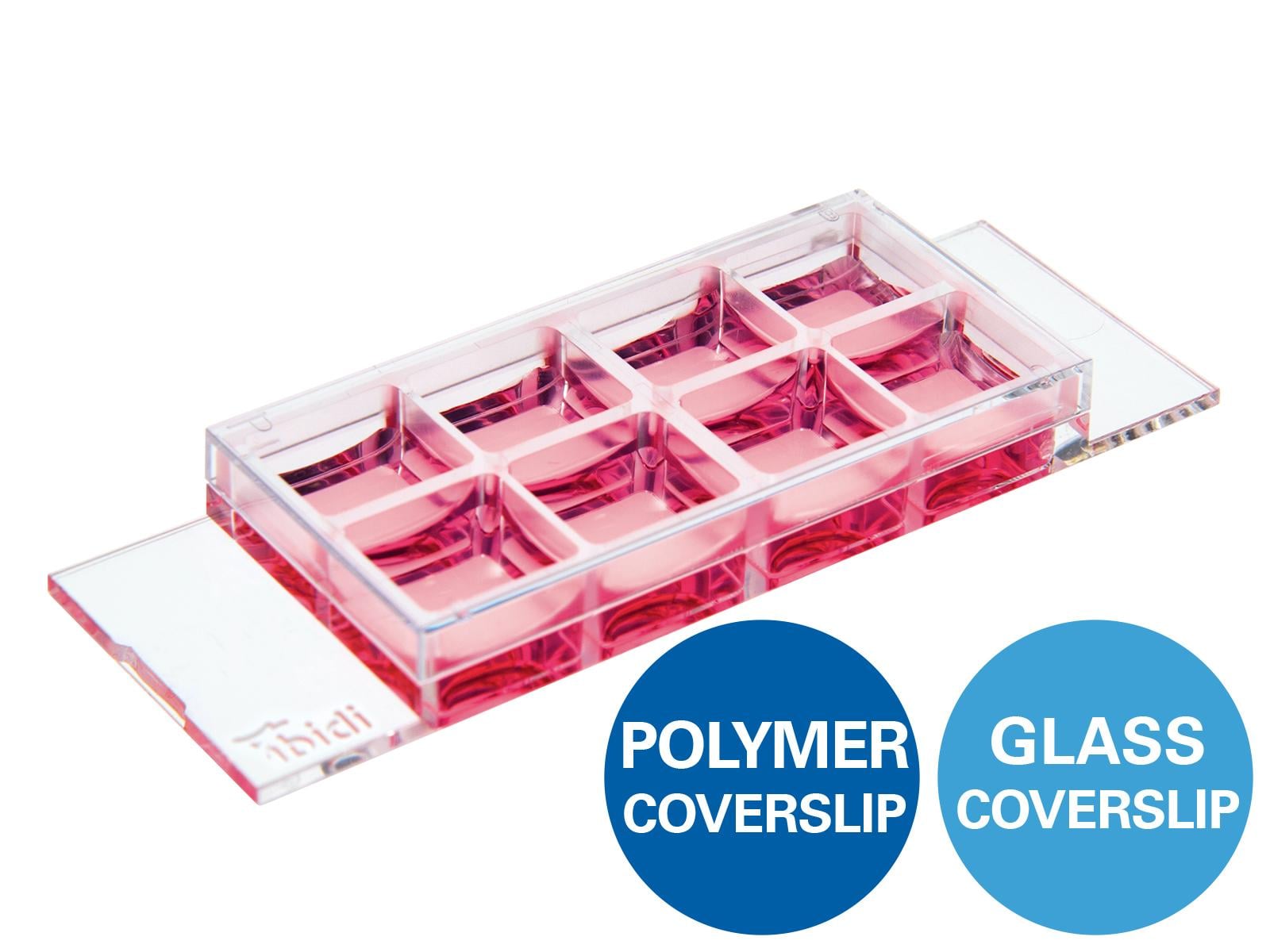
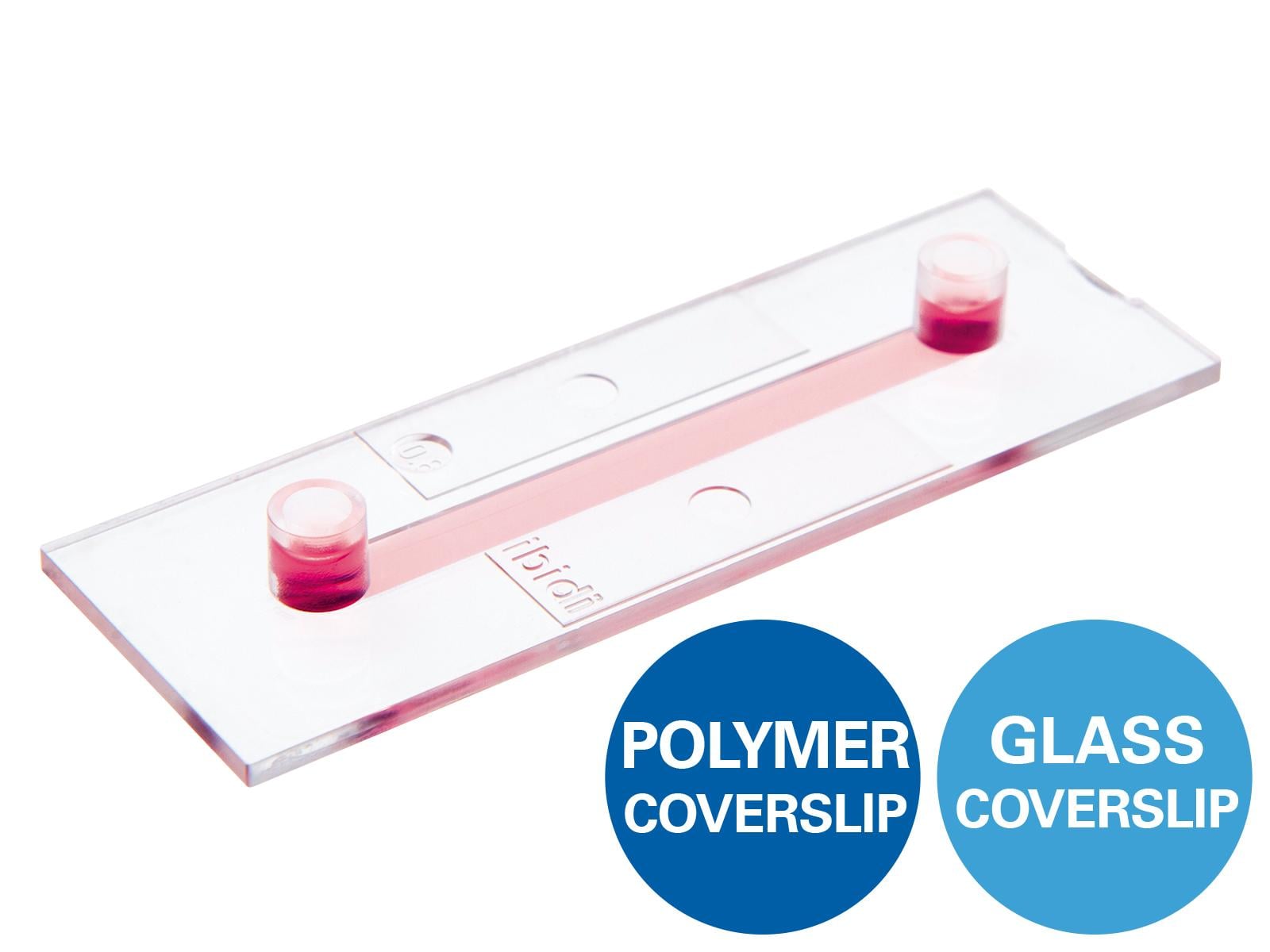
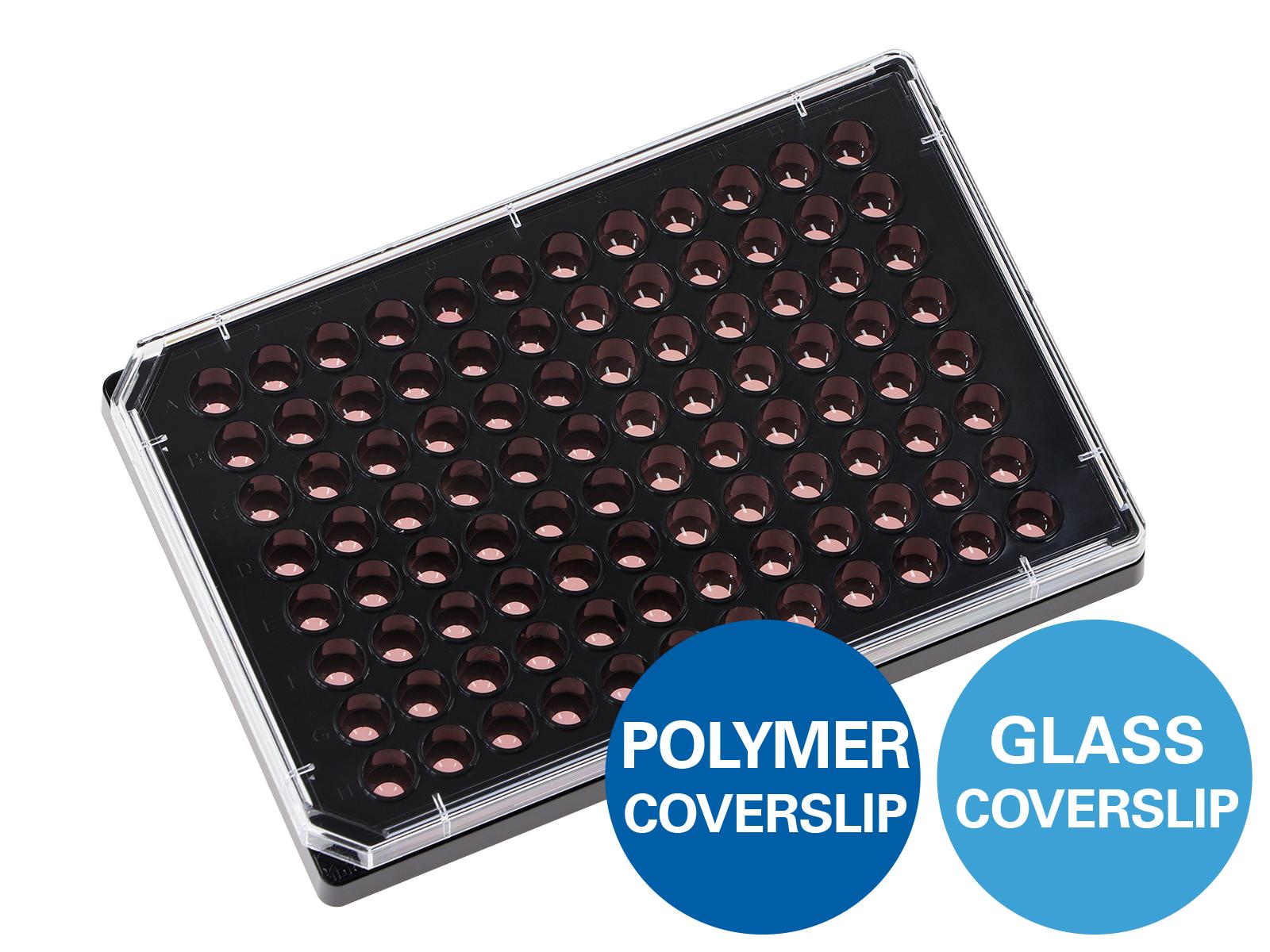
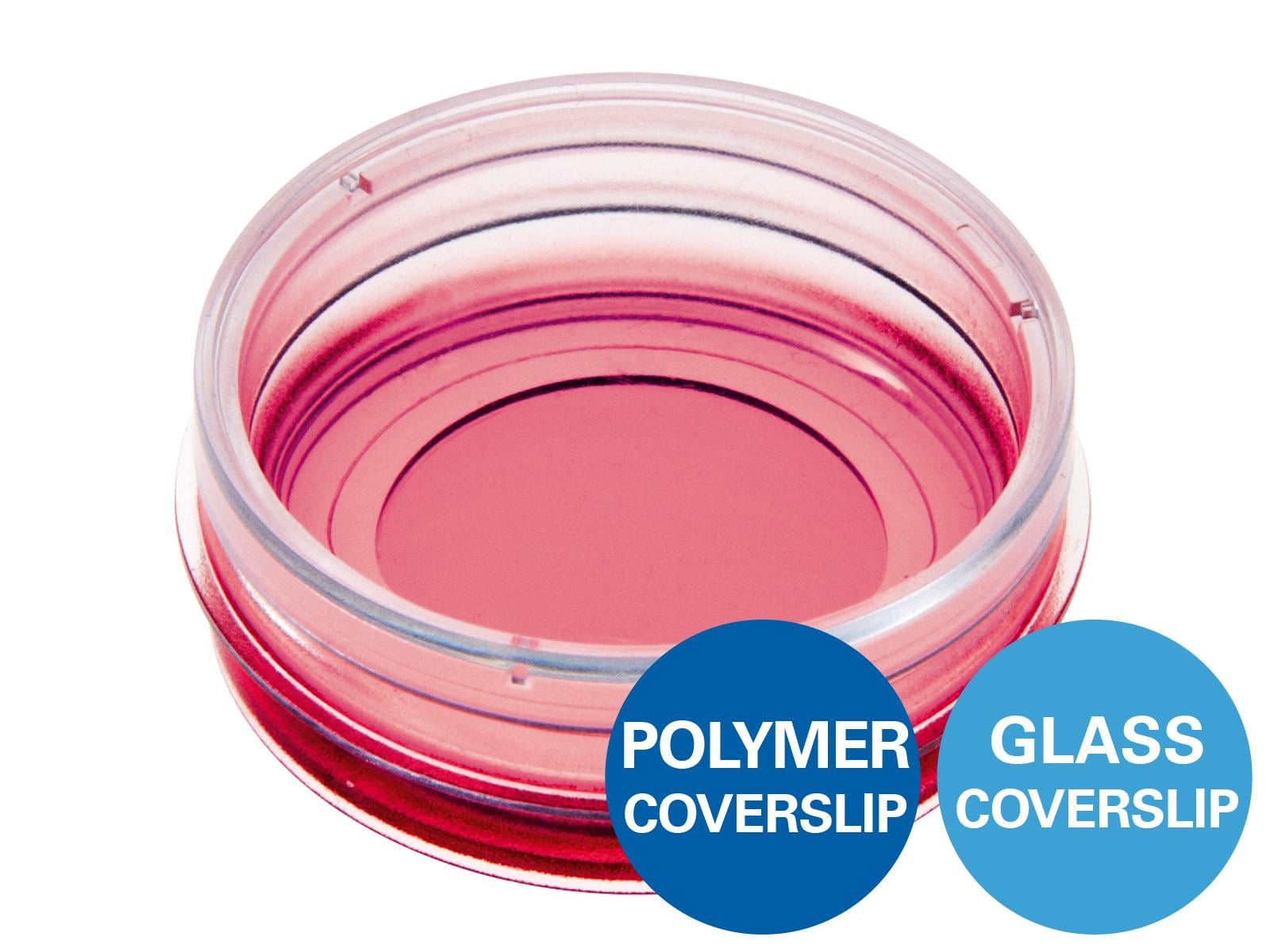
TT5: Multiwell Plates with Clear, White, and Black Well Walls
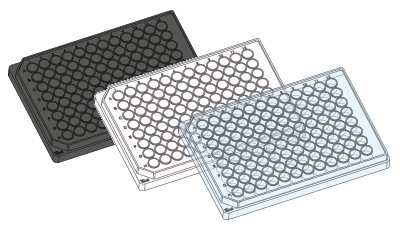
ibidi multiwell plates can be produced with clear, white, or black materials for the well walls to support different optical readout methods in high-throughput assays, high-content imaging, and automated microscopy workflows.
This technology demonstrates ibidi’s expertise in assay-optimized plate design, optical performance, and application-specific labware development.
Why It Matters
The well wall material of multiwell plates can strongly influence the optical readout, especially in high-throughput and high-content assays. Depending on the detection method, clear, white, or black well walls can help improve signal quality, reduce background, or support visual sample inspection.
By producing plates in different wall colors, ibidi can match the optical properties of the plate to the specific assay requirements. This enables researchers to select suitable plate formats for microscopy, fluorescence detection, luminescence assays, and automated analysis workflows.
Multiwell plate color options help researchers to:
- Improve optical readout conditions for fluorescence and luminescence assays
- Reduce background signal and crosstalk in fluorescence-based measurements
- Enhance luminescence signal detection in low-light assays
- Maintain clear visual inspection and high-resolution microscopy compatibility
- Support reproducible high-throughput and high-content assay workflows
The Idea Behind the Technology: Optimizing Optical Readout in High-Throughput Assays
Different optical detection methods benefit from different materials for the well walls. ibidi can produce transparent, white, and black multiwell plate formats to support the specific requirements of cell-based assays, microscopy, and plate reader applications.
Transparent or clear plates are well suited for visual inspection during cell culture assays and for high-resolution microscopy. They allow direct observation of cells and are especially useful when transmitted light imaging, phase contrast microscopy, or general sample inspection is required.
White plates are optimized for luminescence assays. The white pigment acts as a diffuse reflector and redirects emitted light toward the detector. This amplifies the detected signal and is especially useful for low-level luminescence measurements.
Black plates are optimized for fluorescence-based applications, particularly when using fluorescence scanners, plate readers, or low NA imaging systems. The black well wall material absorbs stray excitation light and minimizes optical crosstalk between wells, resulting in lower background noise and improved signal separation.
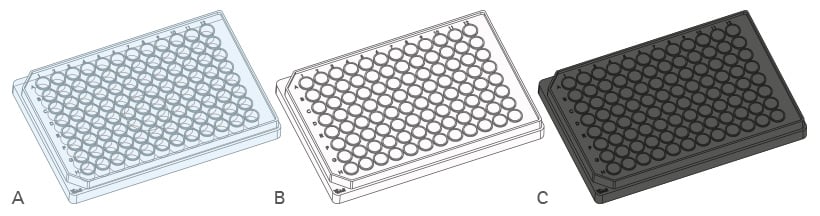
ibidi µ-Plates with different materials for the well walls. (A) Clear material supports visual inspection and high-resolution microscopy. (B) White material enhances luminescence readout by reflecting emitted light toward the detector. (C) Black material reduces stray light and crosstalk in fluorescence-based assays.
Status and Outlook
Multiwell plates with clear, white, and black well walls are established in ibidi production and can be produced for application-specific assay requirements. These plate variants expand the flexibility of ibidi multiwell formats for optical readout, automated imaging, and cell-based assay development.
Synergies and Compatibility
Clear, white, and black multiwell plate materials support a broad range of assay workflows, including fluorescence microscopy, luminescence detection, high-content imaging, and automated high-throughput analysis.
The plates are produced in the ANSI/SLAS, formerly SBS, microplate format and are therefore compatible with standard lab automation systems, plate readers, and high-throughput screening workflows.
This makes the technology especially relevant for users who need to match plate material, detection method, and automated assay setup for reproducible optical readout.
Related ibidi Products
Key Facts
- Project lead: Elias Horn (ehorn@ibidi.de)
- Stage: Production-ready
- Focus Area: High-Throughput Assays, High-Content Imaging, Assay Automation, Optical Readout, Cell-Based Assays